Explained: An Overview of 3D Engineering Design
Not only did the advent of complex computer software render exhausting engineering calculations with the slide rule obsolete, it also enabled an increased ability to communicate 2D and 3D designs. Although we have largely improved from traditional 2D representations, we still rely on them heavily, to the point that even the internet is dominated by 2D renders and static screenshots. Ironically, the same technology that supports 3D design does very little to display it, and as such, complex spatial geometry, assembly motion, and finite element results are not as well understood as they could be.
3D Modeling
Before technology packages like SolidWorks, engineers primarily relied on manual drafting. This required large tables, huge pages, and an assortment of writing utensils and angle tools. Now, a computer offers all of the same capabilities - and so many more - in a software type called Computer-Aided Design (CAD). CAD enables rapid iterations, numerous configurations, parametric modeling, and a host of other features that manual drafting was not able to support [1].
3D modeling is more than designing parts – it is also key to calculation-intensive representations like Computational Fluid Dynamics (CFD) and Finite Element Analysis (FEA), which both use finite element or volume methods to compute the distribution of forces and displacements in highly complex and nonlinear systems. Both CFD and FEA allow engineers to replicate real-world scenarios without the expense or time required to make physical prototypes [2]. Indeed, a key benefit of CAD is the amount of waste reduction it achieves before designs are physically produced [3].
3D Design
While many 3D design software packages are related directly to engineering, many are also related to animation, visual effects, virtual reality, simulation, and additive manufacturing. Interior design and fashion can even make use of 3D design [4]. In a 3D world, it should seem intuitive that 3D design can be more natural and useful to us than 2D design. 3D design extends beyond traditional raster editors like Photoshop by incorporating textures, lighting, and interactive functionality to our work [5].
3D Web Software
Fortunately, AI offers an opportunity for technical communication to develop once more, this time towards a medium where digital readers can rotate, inspect, and interact with 3D models and simulations directly in the browser, even with no specialized CAD software required. AI can quickly create code that can display interactive web technologies on websites and also explain how to deprecate models to a form that can be viewed online.
Browser-based and cloud-native tools are becoming increasingly abundant - consider Onshape, which is the forerunner of modern CAD. Web-friendly formats like .gltf and .glb are a .jpeg in the next dimension, with the latter being a simplified version. However, these require enhanced performance optimization, as 3D files can easily be dozens of megabytes in size [6].
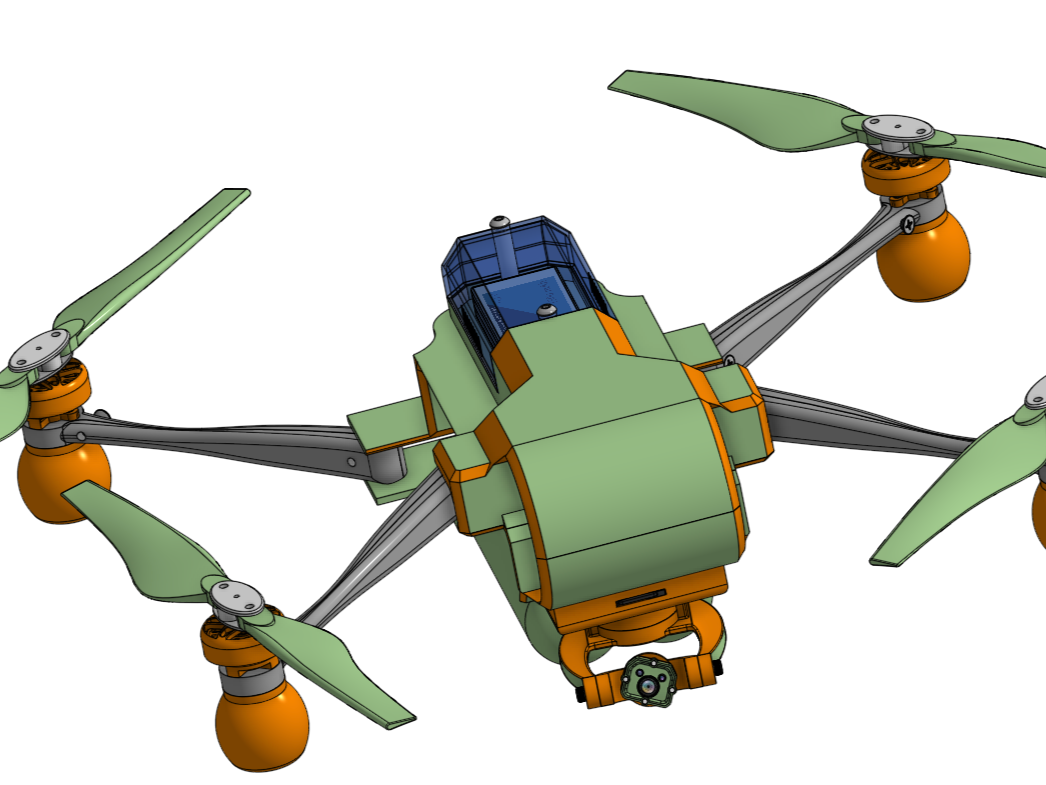
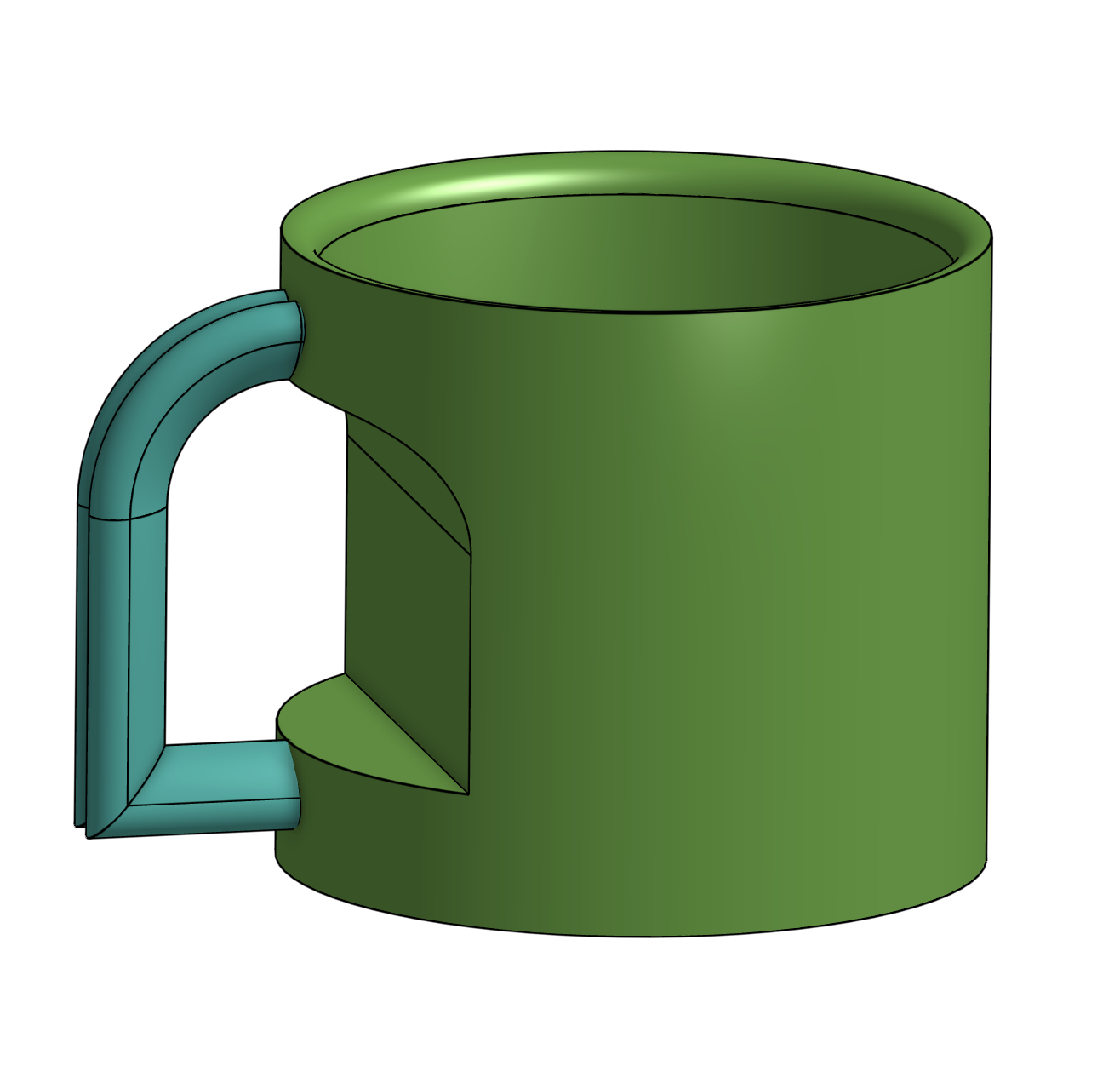
Because of the computational demand, much of 3D design can be expensive. Still, the Web is the ideal place to democratize our access to 3D design. Consider Google Earth, a technology nearly two decades old that has brought 3D imagery to people all over the globe [7]. The models in this article were all CAD designs from the author, exported as .glb files, and then turned into base64 strings in HTML code. While these models are relatively simple, the 3D functionality vastly improves understanding.
References
[1] PTC. "What Is 3D CAD Software?" PTC, www.ptc.com/en/technologies/cad/3d-design. Accessed 17 Oct. 2026.
[2] Ansys. "What Is Finite Element Analysis (FEA)?" Ansys, www.ansys.com/simulation-topics/what-is-finite-element-analysis. Accessed 17 Oct. 2026.
[3] The AEC Associates. "The Strategic Advantages of 3D Product Design for Modern Manufacturers." The AEC Associates, theaecassociates.com/blog/3d-product-design/. Accessed 17 Oct. 2026.
[4] Coursera. "What Is 3D Design? Definition, Applications, and Careers." Coursera, www.coursera.org/articles/3d-design. Accessed 17 Oct. 2026.
[5] Webflow. "3D Graphic Design: A Guide for Designers." Webflow Blog, webflow.com/blog/3d-graphic-design. Accessed 17 Oct. 2026.
[6] Robbie, Henry. "Why Performance Optimization Matters in 3D Web Design." Medium, 2023, medium.com/@henryrobbie/why-performance-optimization-matters-in-3d-web-design-a1c285c08b80. Accessed 17 Oct. 2026.
[7] EBSCO Information Services. "Google Earth." EBSCO Research Starters, www.ebsco.com/research-starters/computer-science/google-earth/. Accessed 17 Oct. 2026.
To cite this article:
Conover, Dylan. “Explained: An Overview of 3D Engineering Design.” The BYU Design Review, 19 Oct 2026, https://www.designreview.byu.edu/collections/explained-an-overview-of-3d-engineering-design.