The Hoover Dam: A Design Masterpiece of Function and Form
I once clicked on an article about the Hoover Dam that popped up in my news feed and since that moment the algorithm has been feeding me a steady dose of content about it. But I do not mind too much. I have become fascinated by the design and engineering of the dam, and I have been learning about its history and significance. The Hoover Dam is a marvel of modern engineering, and it is a testament to human ingenuity and determination. It is a symbol of progress and innovation, and it has had a profound impact on the development of the American West.
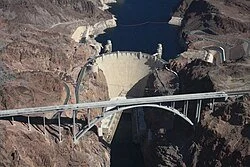
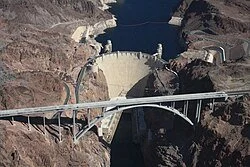
Figure 1: The Hoover Dam downstream face [1].
I will share some interesting facts about the Hoover Dam that I have learned and share some lessons it inspires that I believe can be applied to design and engineering in general.
The Hoover Dam is a concrete arch-gravity dam that was built on the Colorado River, on the border between Arizona and Nevada. I may not be a civil engineer by training, but I can appreciate the brilliance of the design. The "gravity" part of the arch-gravity dam design allows the weight of the dam to resist the force of the water pushing against it, while the "arch" shape helps to distribute the weight of the water evenly across the structure and into the side walls of the canyon. You may be familiar with dams that are built in a straight line, which are understandably easier to construct, but the Hoover Dam's curved design allows it to be more efficient and effective in holding back the water.
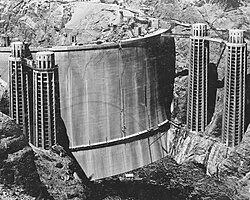
Figure 2: Upstream side of Hoover Dam at low water levels [2].
This suggests that in design, sometimes the most effective solutions may not be the most obvious or straightforward. It is important to consider different approaches and to think creatively about how to solve problems. We all know the shortest distance between two points is a straight line, but often the best solution is not the most direct one when it comes to the design space.
The Hoover Dam was constructed during the Great Depression (1929-1939), and it was a massive undertaking that required the efforts of thousands of workers. Surprisingly, the Hoover Dam was completed ahead of schedule and under budget, which is a testament to the skill and dedication of the engineers and workers who built it.
I like this element of the story because it shows that even in difficult times, great things can be accomplished through hard work and determination. It also highlights the importance of collaboration and teamwork in achieving success. One clear lesson is that even during challenging times, it is possible to achieve great things through hard work, determination, and collaboration. Therefore, the next time you or I are faced with a difficult challenge, a time constraint or even a budget limitation, I hope we can remember Hoover Dam. In fact, some of our best work may be accomplished when we are faced with adversity and other types of constraints.
The dam itself stands more than 60 stories tall, at 726.4 ft (221.4 m) — which is about half of the height of the Empire State Building — and stretches 1,244 ft (379 m) across the Black Canyon of the Colorado River. The dam's construction required innovative techniques and materials, including the use of massive amounts of concrete and steel. One amazing aspect of the dam's construction was the use of a revolutionary cooling system. Engineers would circulate chilled water through pipes embedded in the concrete to cool and solidify it. Without this system, the concrete would have taken decades to cure.
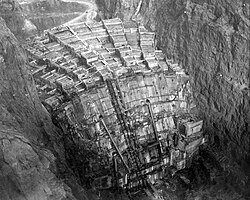
Figure 3: Historical construction of the Hoover Dam [3].
The lesson I take from this is that if we are willing to think outside the box and explore new ideas, we can achieve great things. In a way, anything and everything we admire and appreciate came from someone (or a group of people) who thought outside the box and were willing to take risks and try something new. This goes for art, technology, sports, movies, music, literature, food, and countless other things. There always had to be time when someone said, "I wonder if we can do this differently?" and then they tried it. Sometimes it worked, and sometimes it did not, but the point is that they tried. And if it was successful, it became something we now eat, drive, hold, watch, or play.
The Hoover Dam power plant contains 17 hydroelectric generators that can produce more than 2,000 megawatts of electricity under favorable water conditions. The water level of Lake Mead has been decreasing in recent years due to drought and increased water demand, which has affected the dam's power generation capacity. If water drops below a certain level, the generators may not be able to function properly, which could lead to power shortages in the region. Concurrently, since the Hoover Dam was completed in 1936, it has become a major tourist attraction, drawing millions of visitors each year. Many people have come to marvel at both its size and beauty. The architect Gordon B. Kaufmann designed the dam in the Art Deco style and he involved other artists and designers to create decorative elements, such as local Native American tribal motifs, colors, and patterns. The Hoover Dam is not only functional but a work of art.
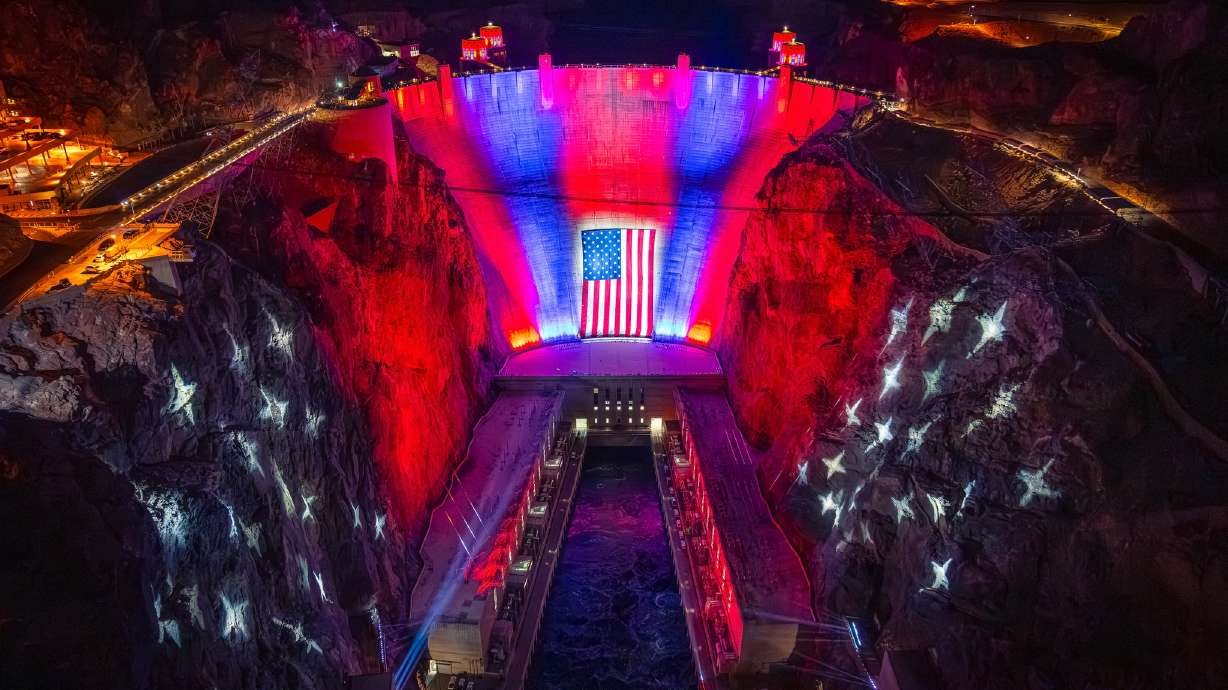
Figure 4: The Hoover Dam illuminated for America's 250th anniversary [4].
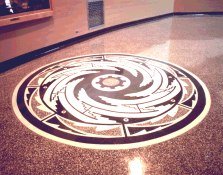
Figure 5: Intricate Art Deco terrazzo tile floor inside the Hoover Dam [5].
The key takeaway for me is that a design does not have to be only functional. Yes, function should be the precursor to form, but form should follow and should never be ignored. Almost any design has space for both function and form. If a design is only functional, it may be effective, but it may not be desirable, inspiring, or memorable. If a design is only beautiful, it may be aesthetically pleasing, but it may not be practical or useful. A great design should strive to achieve both function and form. The Hoover Dam is an excellent example of this balance.
REFERENCES
[1] Wikimedia Commons contributors. Hoover Dam from Mike O'Callaghan–Pat Tillman Memorial Bridge. Wikimedia Commons, 2013, https://commons.wikimedia.org.
[2] Wikimedia Commons contributors. Upstream of Hoover Dam at Low Water Levels. Wikimedia Commons, 2021, https://commons.wikimedia.org.
[3] Bureau of Reclamation. Construction of the Hoover Dam. U.S. Department of the Interior, Wikimedia Commons, 1934, https://commons.wikimedia.org.
[4] KSL.com. "Hoover Dam Receives Patriotic Glow-Up for America 250." KSL, 2026, https://www.ksl.com/article/51502690/hoover-dam-receives-patriotic-glow-up-for-america-250.
[5] Wikimedia Commons contributors. Terrazzo Tile Floor Design Inside the Hoover Dam. Wikimedia Commons, 2016, https://commons.wikimedia.org.
To cite this article:
Salmon, John. “The Hoover Dam: A Design Masterpiece of Function and Form.” The BYU Design Review, 23 Sep 2026, https://www.designreview.byu.edu/collections/the-hoover-dam-a-design-masterpiece-of-function-and-form.