Explained: Mechanical Advantage
Perhaps the foremost reason that engineering design is critical to our daily lives is mechanical advantage. Well-engineered systems can take advantage of geometry and materials (like pulleys) to create a mechanism where the output force is greater than the input force – that is, the advantage is a force multiplier [1]. While balancing energy, simple machines enable a user to perform a task that is above one’s own strength or increase the efficiency of energy use. Through these simple machines, engineers have led great construction projects and harnessed magnitudes of forces that are beyond even the strongest human’s ability. This article touches on some of the most fundamental simple machines: the lever, wheel & axle, pulley, wedge, and screw [2].
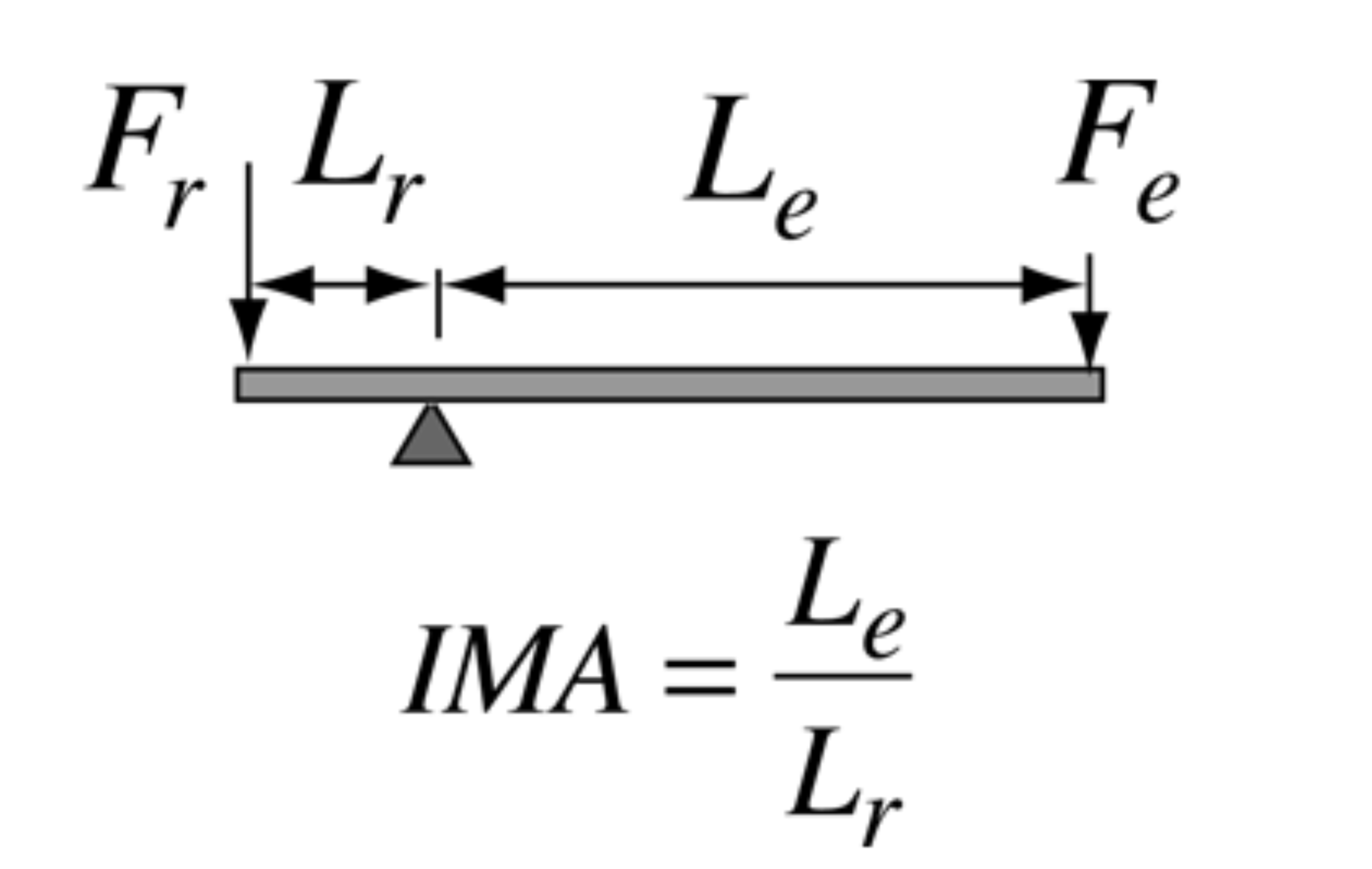
Figure 1: A diagram of the mechanical advantage of a lever [3].
Lever
The physics of a lever concern torques and moments - the application of a force on a fulcrum at a certain (nonzero) distance. In essence, a smaller force applied through a greater distance can cause a much greater force through a small distance, which is the principle of all simple machines [3]. Car jacks are a great example of a complex machine that is derived from a simple one - many pumps of a bar with low force slowly raise a much heavier vehicle.
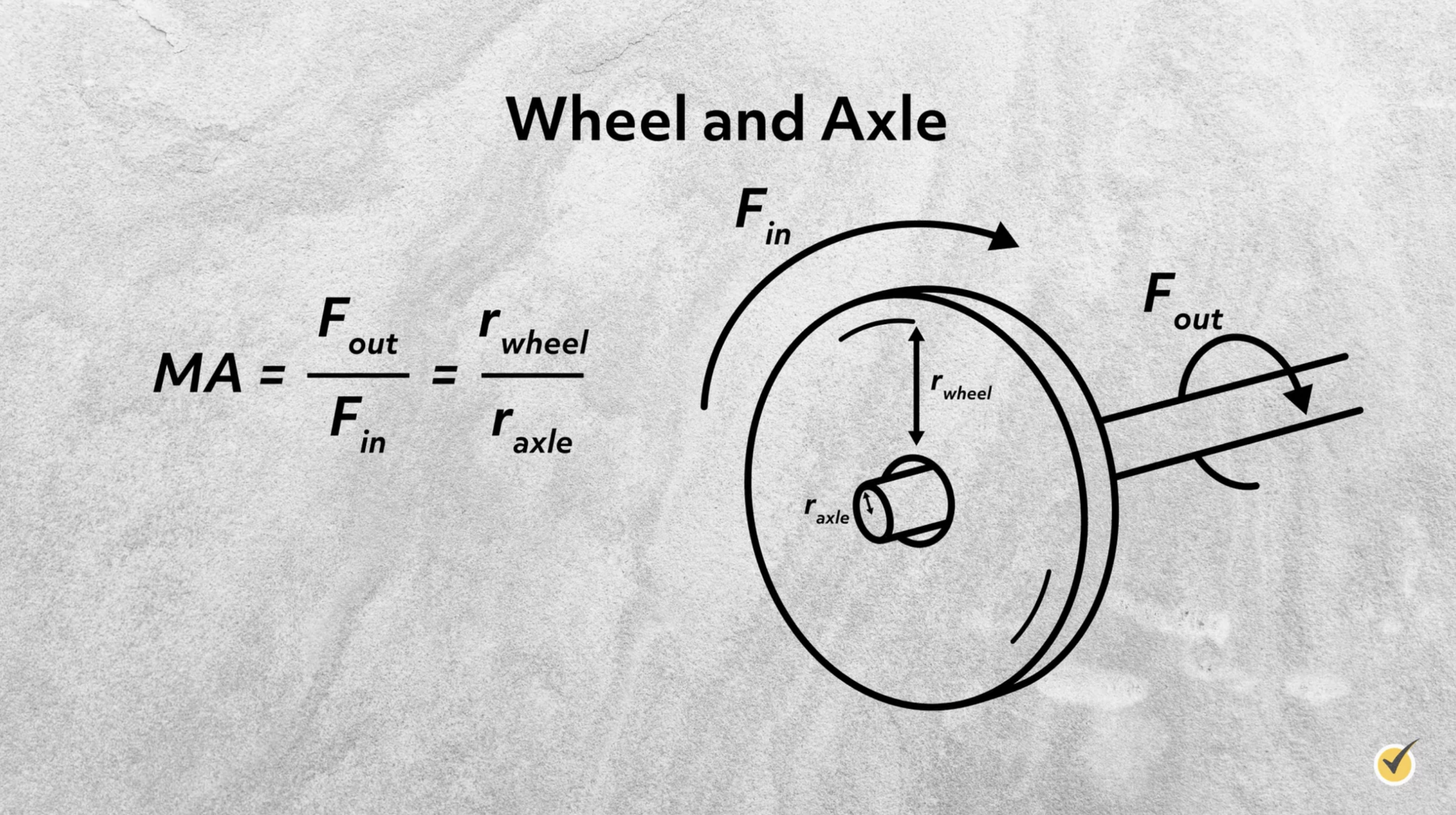
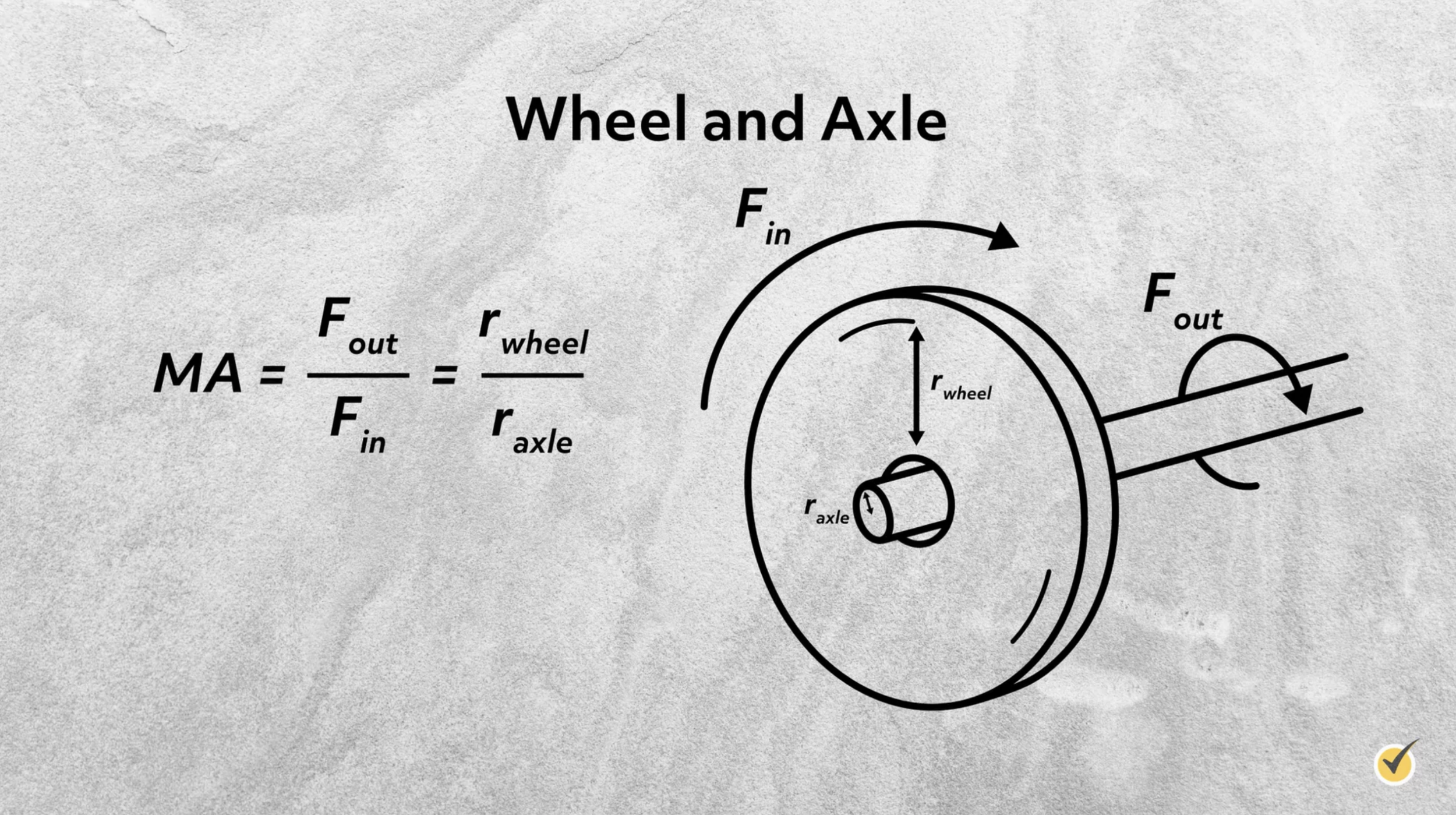
Figure 2: A diagram of a wheel and axle [4].
Wheel and Axle
A wheel and axle are a lever applied in a circular motion. The fulcrum becomes the center, and the lever arms become the radii of the axle and the wheel. A crank is a sort of wheel that requires a smaller force applied through larger circles to rotate an axle in a smaller circle but with greater force. Thus, work applied to the crank is outputted to the axle - and work is defined as a force multiplied by the distance it goes through [4].
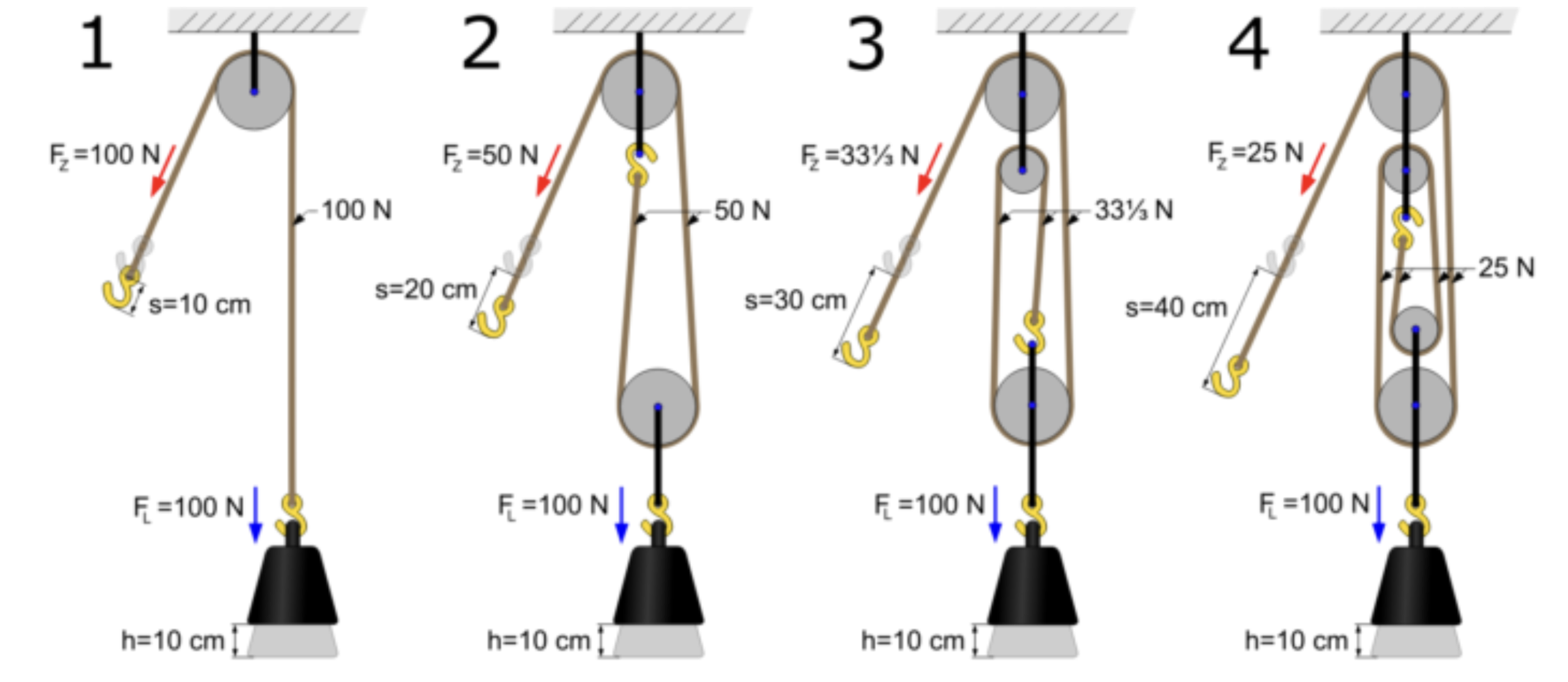
Figure 3: A diagram of the mechanical advantages of various pulley systems [5].
Pulley
Pulleys are similar in principle to levers, but they primarily take advantage of the mechanical qualities of rope. A rope is an object that can only support forces in tension (pulling away from the ends), and it redirects a force at an angle around the pulley. The more ropes that support a weight, the less force it takes to raise the weight. This works proportionally: two ropes halve the force required, and three ropes require only a third [5].
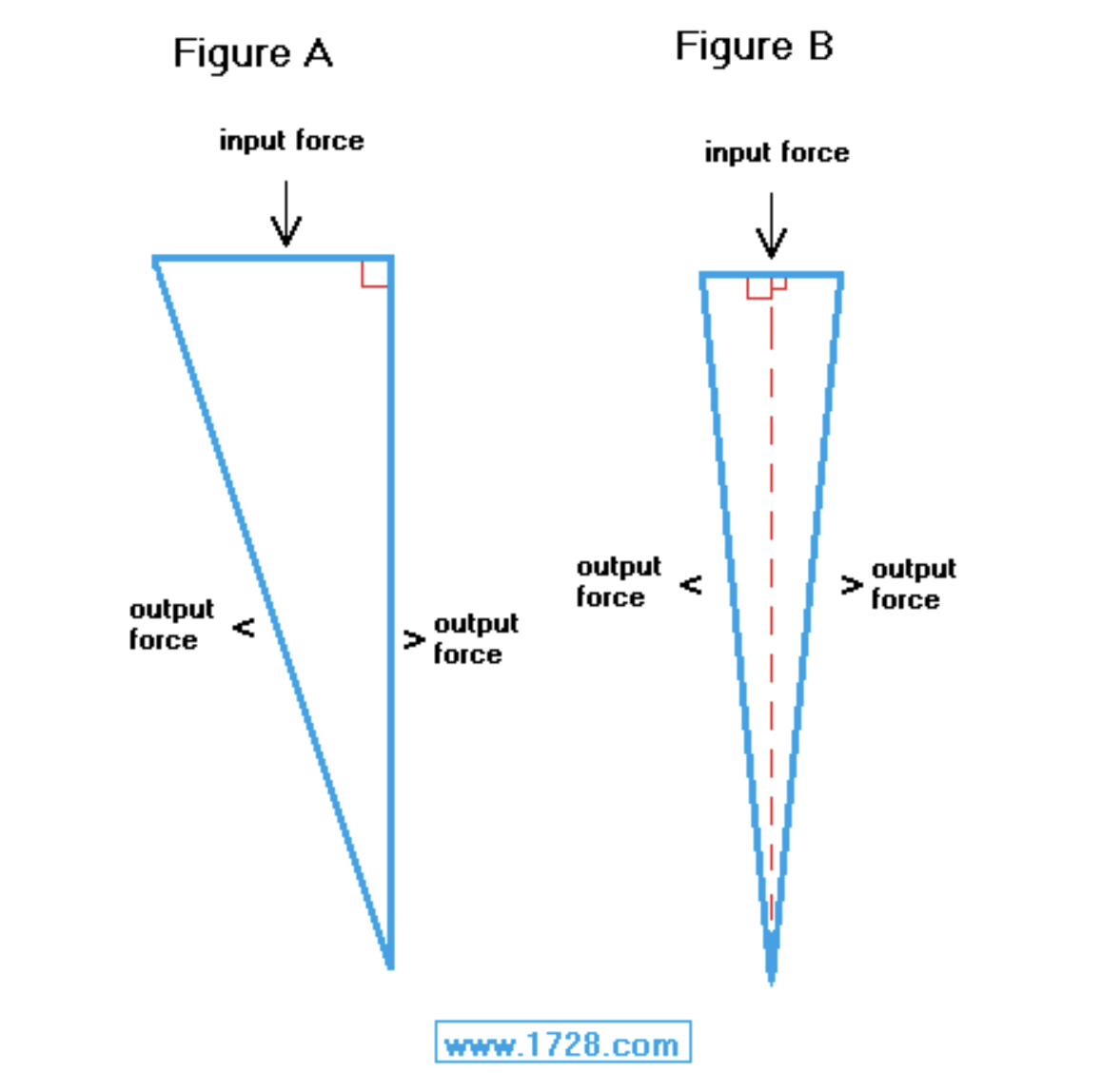
Figure 4: A diagram of the two ways in which a wedge can be used [6].
Wedge
Wedges and inclined planes are primarily used for construction or transportation purposes. This simple machine converts the direction of the force from one of vertical or horizontal to the other. A common manifestation of this is the ramp - rather than one single jump up to the end of the walkway, a ramp breaks it into smaller steps that are easier to take. It is much easier to push a cart along an inclined ramp than heave it up the stairs [6].
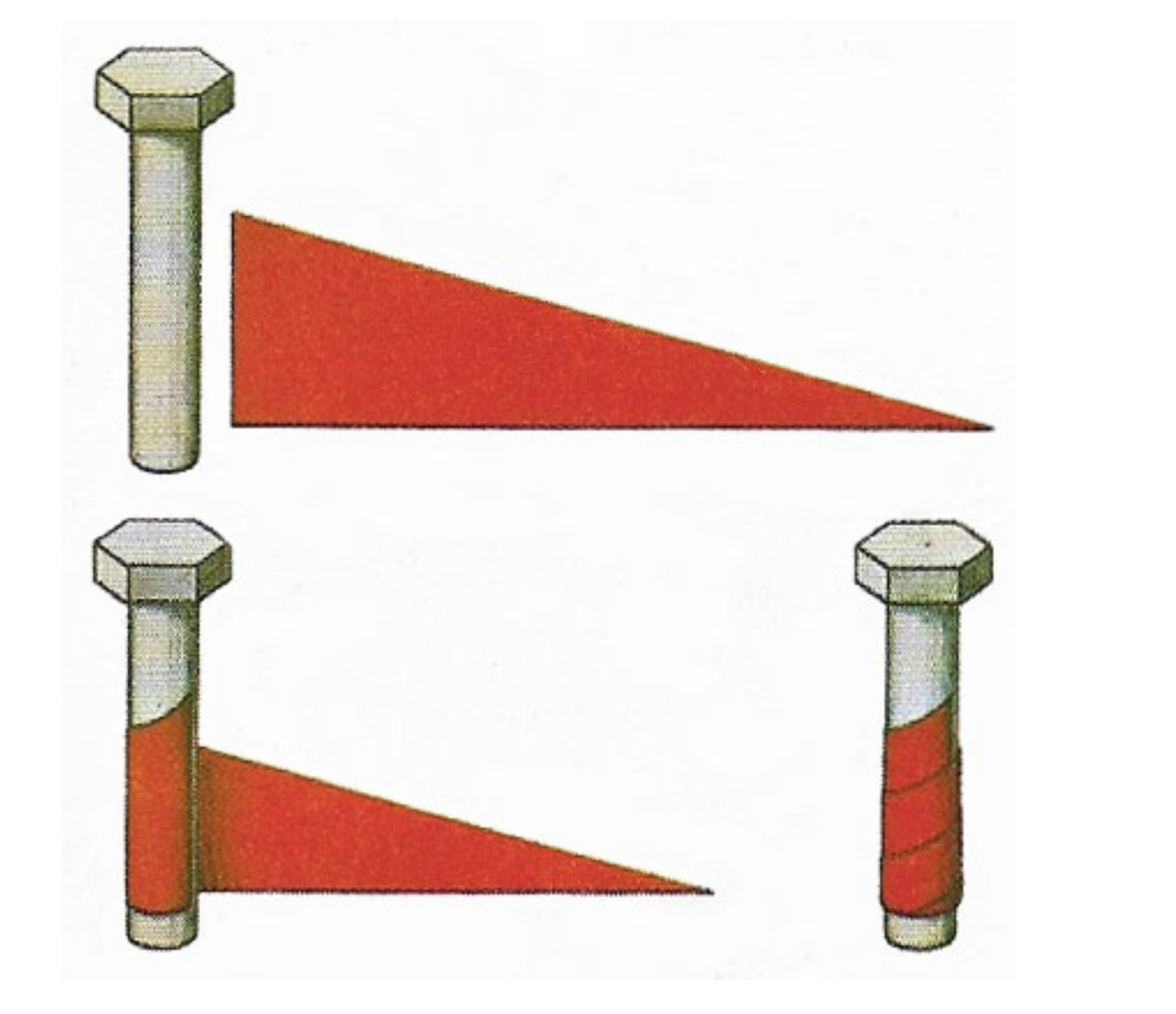
Figure 5: A diagram of a screw, which is essentially a wedge wrapped around a circular object [7].
Screw
Screws combine the principles of a wheel and lever with a wedge. Small twists of a screw, relatively easy, can apply a strong compression force. Screws have been studied and developed for thousands of years, and famous screws include the Archimedes Screw, used to raise water. Modern usage of the term “screw” usually entails the small piece used in construction, and they are certainly the most prolific example of screws [7].
Tools enable us to accomplish our tasks more efficiently and effectively, but simple machines in particular have led humanity to make use of limited force for much higher outputs. Through angles, forces can also be redirected. Simple though they may be, these mechanisms have greatly contributed to the world [8]. Good design practices ensure the maximum implementation of relevant simple machines in a given project.
References
[1] "Mechanical Advantage." Energy Education, 2023, energyeducation.ca/encyclopedia/Mechanical_advantage.
[2] "Simple Machines & Mechanical Advantage." EBSCO Research Starters, 2023, www.ebsco.com/research-starters/engineering/simple-machines-mechanical-advantage/.
[3] Nave, Rod. "Levers." HyperPhysics, Georgia State University, hyperphysics.phy-astr.gsu.edu/hbase/Mechanics/lever.html.
[4] "Simple Machines." Mometrix Academy, www.mometrix.com/academy/simple-machines/.
[5] Truex. "Lesson 4: An Engineering Introduction to Machines - Pulleys." Truex Education, 13 Dec. 2018, truex.info/2018/12/13/lesson-4-an-engineering-introduction-to-machines-pulleys-december-13-14/.
[6] "Wedge and Mechanical Advantage." 1728 Software Systems, www.1728.org/6machwed.htm.
[7] Darling, David. "Screw." Encyclopedia of Science, www.daviddarling.info/encyclopedia/S/screw.html.
[8] "Simple Machines." TeachEngineering, www.teachengineering.org/popular-topics/simple-machines.
To cite this article:
Conover, Dylan. “Explained: Mechanical Advantage.” The BYU Design Review, 14 Sep 2026, https://www.designreview.byu.edu/collections/explained-mechanical-advantage.