Stompbox Architecture: A Lesson in Engineering Design
Introduction
Every hardware engineer eventually faces a fundamental trade-off: as a system’s internal functionality grows more complex, its user interface tends to become equally cluttered and fragile. Yet on live musical stages around the world, you will find intricate electronic devices subjected to a plethora of extreme conditions – all while offering a control interface so simple it can be operated by a foot in the dark. These devices are guitar pedals, commonly referred to as "stompboxes," and they represent one of the most successful examples of rugged, human-centered hardware design in consumer electronics.
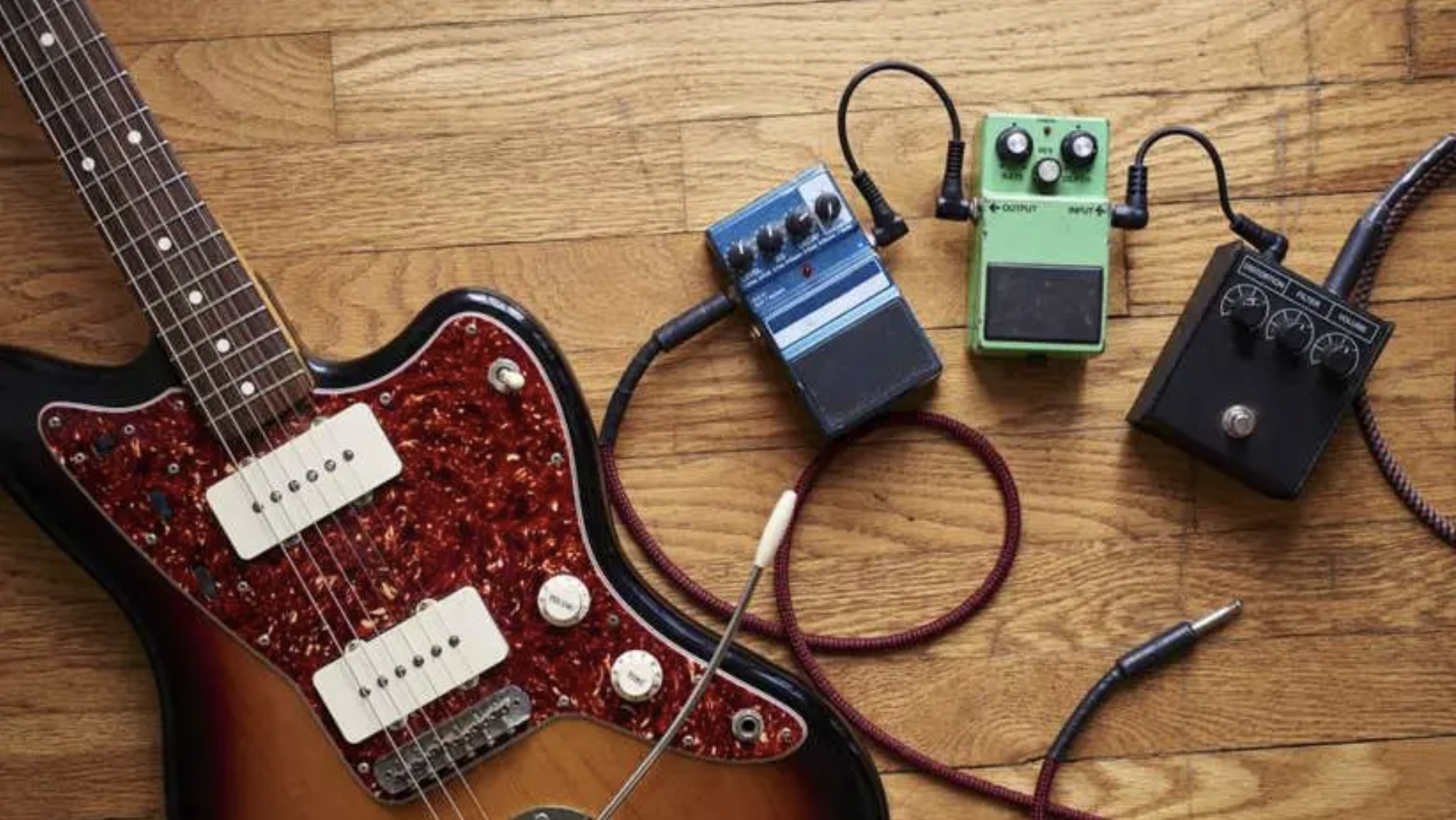
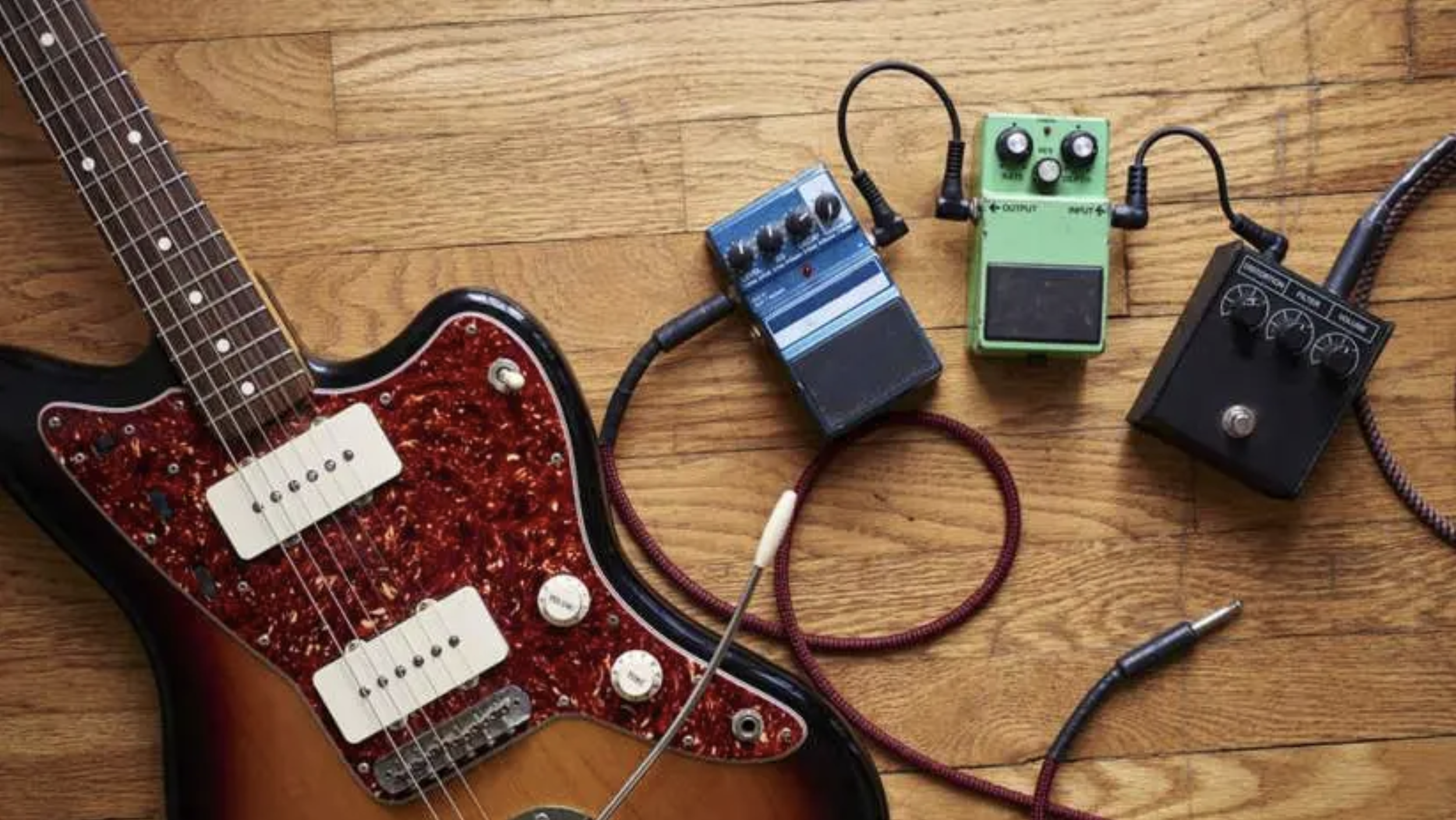
Electric guitar featuring an array of pedals [1].
What began in the 1960s as delicate, one-off studio workarounds to modify analog audio signals has evolved into a standardized, industrial-grade physical computing platform. Behind the iconic sounds of modern music lies a masterclass in elaborate electrical and mechanical design: shielding delicate electronics inside metal enclosures to block noise while keeping sound signals clear across long cables. Understanding how guitar pedals evolved to handle these tough real-world challenges offers valuable lessons for any engineer looking to design reliable and durable systems.
The Evolution of the Stompbox
Before guitar pedals existed, musicians achieved distorted tones through various mechanical hacks – such as poking holes in speaker cones or pushing delicate vacuum tube mixing consoles past their limits. While these methods produced the desired crunch, they were non-portable, destructive, and nearly impossible to replicate consistently on stage. Driven by the demand for a safer, reliable alternative, recording engineer Glenn Snoddy designed the Maestro Fuzz-Tone FZ-1 in 1962, which became the first widely distributed commercial effect pedal [2]. This standalone solid-state transistor circuit replicated the sound of an overdriven vacuum tube without the physical risks and equipment damage associated with traditional methods.
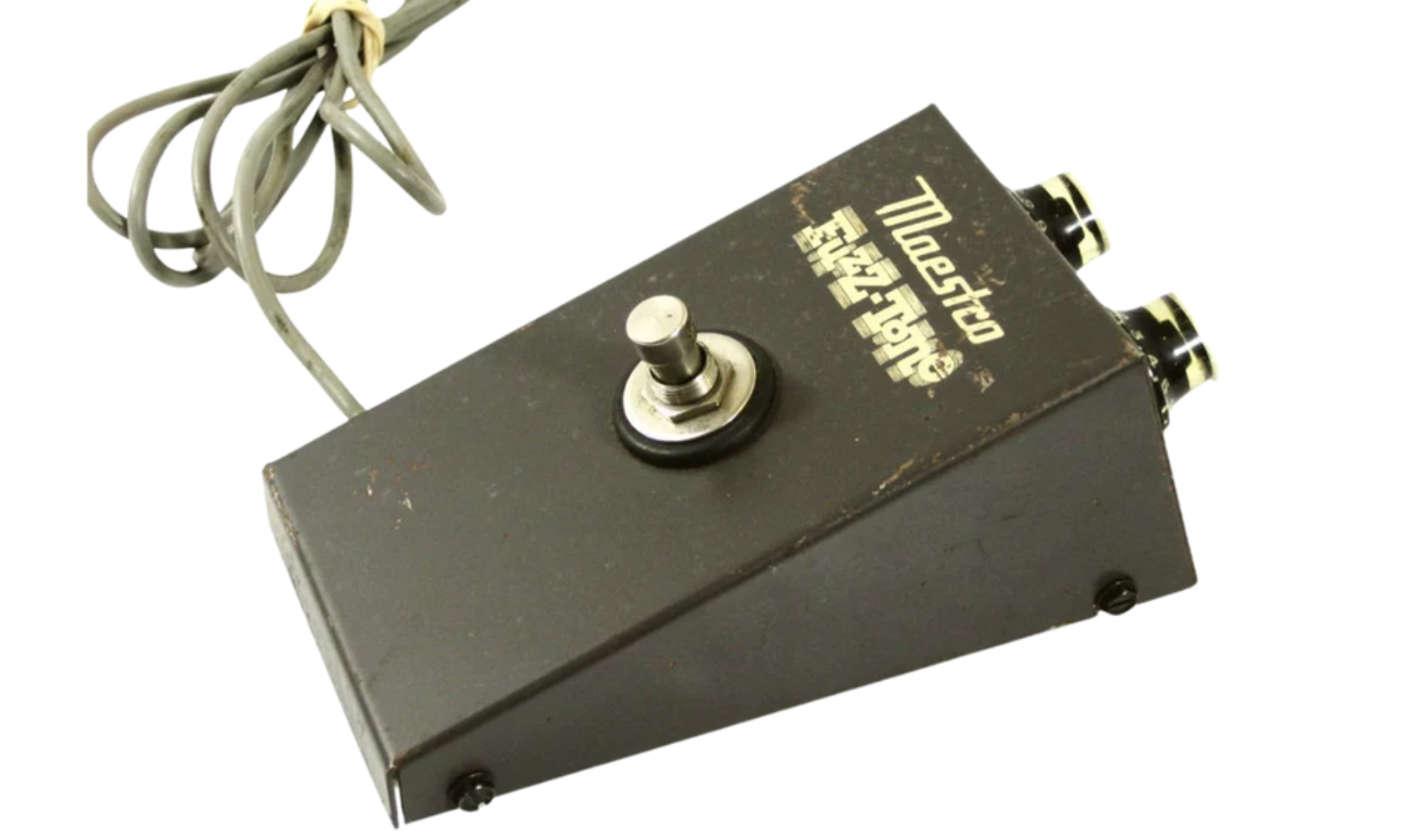
The original Maestro Fuzz-Tone [3].
As pedal design evolved into the 1970s, engineers began utilizing Bucket Brigade Devices (BBDs) to generate time-based effects like delay, chorus, and flanging [4]. The term "bucket brigade" refers to a human chain where buckets of water are passed from person to person to put out a fire. Similarly, a BBD chip creates an analog delay by passing an audio signal along a line of internal capacitors, temporarily storing and transferring the voltage at each step. By adjusting the delay time and blending the feedback into the original signal, these solid-state devices enabled a wide variety of iconic atmospheric effects that remain commonplace in music today.
As digital technology evolved, signal processing shifted away from analog circuits, and studio mixing equipment quickly followed suit [5]. However, bringing digital technology to guitar pedals posed a significant engineering hurdle: early digital audio converters and processors were simply too large to fit inside a traditional stompbox enclosure. This barrier broke when Boss introduced the DD-2 (and its cost-optimized successor, the DD-3), proving that engineers could package digital signal processing (DSP) into a compact, foot-operated form factor [6]. As DSP chips became smaller and more affordable, high-fidelity digital effects expanded beyond professional recording studios, allowing guitarists around the world to access pristine delays, dynamic pitch shifts, and complex reverberations right from their pedalboards.
Engineering Takeaways
The guitar pedal is a compelling case study in human-centered engineering design. It demonstrates how a system can absorb immense internal complexity while remaining simple, intuitive, and focused on the end user. Over time, pedal circuitry has grown increasingly sophisticated – incorporating multi-stage gain structures, variable Q-factor equalization, and intricate digital feedback loops. Yet as internal functionality expanded, the user interface has not. To this day, guitar pedals remain remarkably accessible, consolidating complex signal-processing parameters into the turn of just two or three knobs. This represents a masterclass in control abstraction. As engineers, it is easy to get lost in technical complexity, but stepping back to view a product through the user's eyes is essential to great design.
Beyond control simplicity, guitar pedals are engineered specifically for the hostile physical environments they inhabit. Stage conditions are notoriously harsh. When a musician activates or deactivates an effect during a performance, it is rarely with a delicate touch; the pedal is stomped on, kicked, and repeatedly impacted. This reality inspired the nickname "stompbox," and it drove hardware engineers to utilize heavy-duty die-cast aluminum enclosures, reinforced foot switches, and rugged internal mounting to ensure the device survives years of touring.
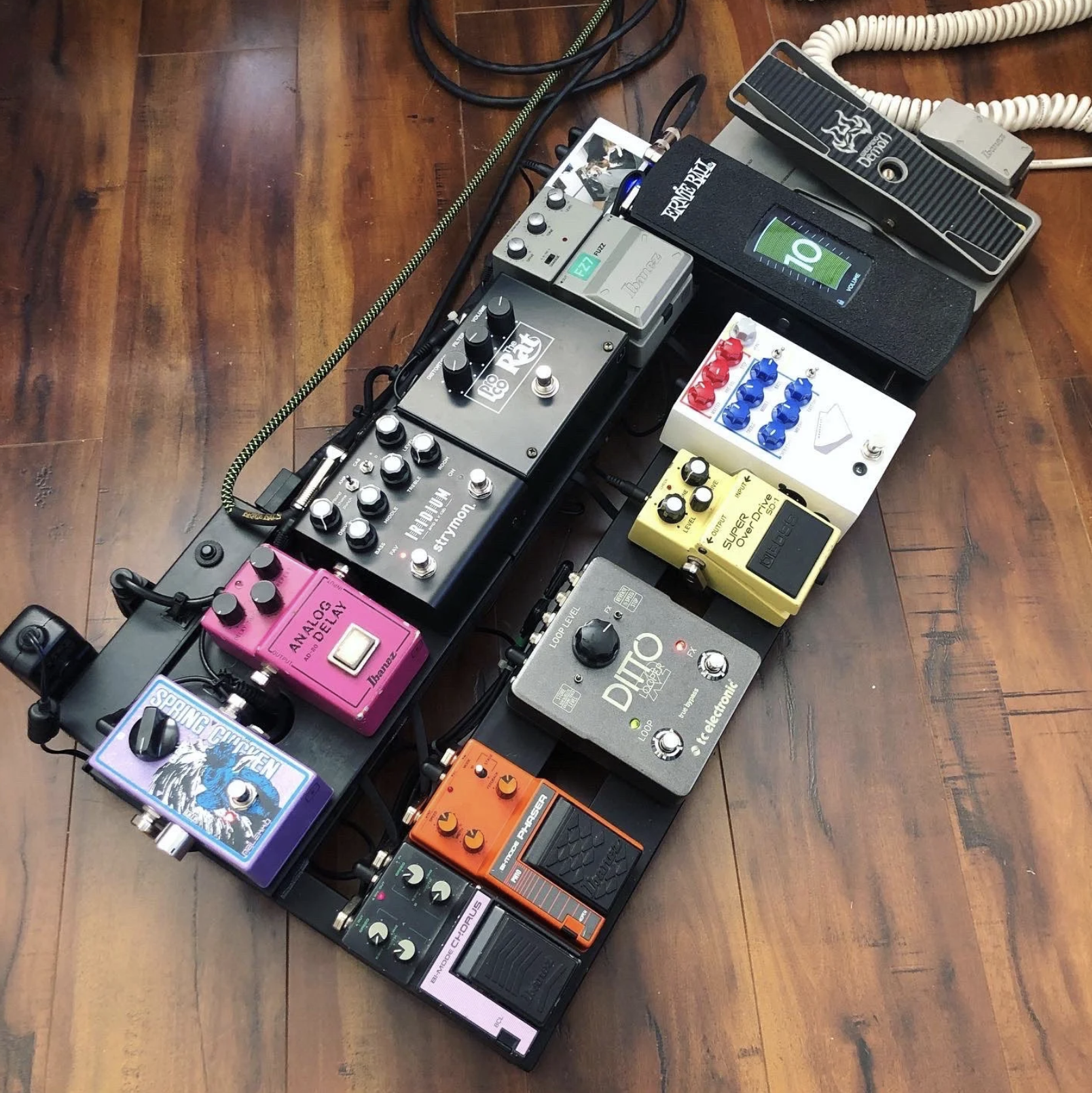
Modern pedalboard [7].
Finally, great pedal design respects the creative autonomy of its users. Engineers realized that musicians do not want a finished painting; they want a paintbrush. By standardizing input/output impedances and voltage levels, designers have enabled pedals to be daisy-chained together in arbitrary sequences. This interoperability transforms individual pedals into flexible building blocks, allowing artists to construct entirely unique sonic landscapes. In doing so, engineers did not merely deliver a single functional product – they created an extensible platform for human creativity.
Conclusion
In engineering, user experience is everything – a design is ultimately useless if nobody can or wants to use it. The evolution of the guitar pedal offers timeless lessons in control abstraction, physical durability, and system extensibility. By keeping these principles at the forefront of the design process, engineers do far more than meet technical specifications or project quotas: they build rugged, human-centered platforms that empower users and foster innovation.
References
[1] Adorama. “15 Essential Guitar Effects Pedals Every Guitarist Should Own.” 42 West, Adorama, 16 Feb. 2021, www.adorama.com/alc/15-essential-guitar-effects-pedals/.
[2] Pedal Pad. “The History of Guitar Pedals.” Pedal Pad, 14 June 2022, pedalpad.com/history-guitar-pedals-pedalpad/.
[3] Catalinbread Mechanisms of Music. “Maestro FZ-1 Fuzz-Tone.” Catalinbread Cabinet, 2021, catalinbread.com/blogs/catalinbread-cabinet/maestro-fz-1.
[4] Sam Ash Music. “The Bucket Brigade Delay Chip: A Brief History in Guitar Pedals.” Sam Ash Spotlight, 2022, www.samash.com/spotlight/post/bucket-brigade-delay-chip-guitar-pedal-history.
[5] Petersen, George. “The History of DSP for Live Sound.” Front of House Magazine, 18 Nov. 2020, fohonline.com/articles/tech-feature/the-history-of-dsp-for-live-sound/.
[6] Gill, Chris. “The Evolution of the Digital Revolution: A History of Digital Stompboxes.” Premier Guitar, 20 Aug. 2019, www.premierguitar.com/pro-advice/state-of-the-stomp/evolution-of-the-digital-revolution.
[7] EarthQuaker Devices. “Beginner’s Guide to Pedalboards: Part 1.” EarthQuaker Devices Blog, 11 Jan. 2023, www.earthquakerdevices.com/blog-posts/beginners-guide-to-pedalboards-pt-1.
To cite this article:
Byington, Hunter. “Stompbox Architecture: A Lesson in Engineering Design.” The BYU Design Review, 28 Sep 2026, https://www.designreview.byu.edu/collections/stompbox-architecture-a-lesson-in-engineering-design.