Mastering the art of writing requires balancing audience intent, AI-driven searchability, and the delicate mix of timely relevance and timeless value to ensure your message resonates.

All in Series
Mastering the art of writing requires balancing audience intent, AI-driven searchability, and the delicate mix of timely relevance and timeless value to ensure your message resonates.
Boost the impact of your professional writing! Learn how formatting and syntax are critical to capturing attention and reducing reader distractions. Follow style guides, master emphasis (use italics and bold, not underlines), and refine sentence structure for clarity and influence.
Elevate your professional and academic influence with effective writing. Learn the four pillars of writing — narrative, descriptive, expository, and persuasive — to communicate with clarity and purpose. Discover how strong writing, even in STEM fields, sets you apart by showcasing your competence and personality.
In this second part on optimization, the basics of the genetic algorithm are explored and explained, with an introduction to selection, cross-over, and mutation.
This article continues the discussion on “systems design” and introduces the system design spectrum that is useful to understand where and why multiple people use the word “system” in multiple ways.
The Tenth Face of Innovation is The Storyteller. Life is full of stories and being able to tell a good one can make all the difference in the world.
We don’t often think of Caregiving when it comes to design or engineering, but we should. This face of innovation can make the difference between an enjoyable experience with a product or process and a miserable one.
Most people agree that the environment can have a huge impact on our state of mind, productivity, and innovation. The Eighth Face of Innovation, The Set Designer, knows this too. Even if we aren’t setting up the spaces for others, we can and should be aware of where we’re are choosing to work and make sure that workspace is what we need to maximize our creativity.
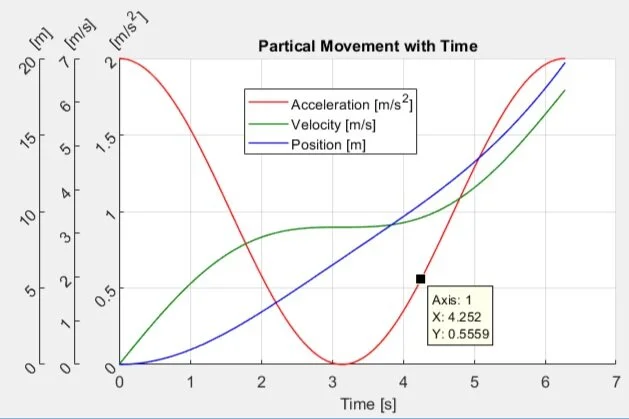
Multi-Axis Figures can be powerful in telling a story, but there are some real pitfalls that we see people fall into time and time again. Be careful and know the mistakes that others have made in order to keep your data figures well designed.
The experience of your product is more important than your product. Is that a deep thought by Jack Handy or a true principle?
Billions of people use mathematics everyday, arithmetic to multivariable calculus. This has become a paradox that I have spent time thinking about – math is certainly useful, yet why is it so hard to explain or show students how it can be useful to them?
Because we have so much information at our fingertips via smart devices and the internet many students complain at having to learn (especially memorize) anything. The common response by students is that this is a waste of time and that these things can always be looked up in the future. Well they certainly can. That isn’t the point I am debating. The problem is that you can only look up things that you know you don’t know.
Directors bring their own set of experiences, styles, and personality to the studio but they all concurrently support the show’s mission and want to make a great product. Thus, an organization or team can have multiple directors even if there still is team leader (or executive movie producer on set). You might not be the leader on your design engineering team but there may still be opportunities to take on the role of Director.
Have you ever zoomed in on an image and it was so pixelated you couldn’t read or understand anything? Have you ever had an email get stuck behind a filter because your figures or images were too big in terms of file size? If any of that sounds familiar, you might be using the wrong kind of images or figures.
Never heard of the data-to-not-data ratio in figures? It’s a good thing to know and consider. This is one article in a series of techniques and practices for designing good figures and visualizations.
Everyone needs collaborators to be successful in design, engineering, and life! Even the lone artist, scientist, and author eventually need collaborators to critique, distribute, buy, or share their work, regardless of how many hours are spent in isolation. Find out what Tom Kelley shares about being a Collaborator - the fifth face of innovation.
Hurdlers are people who find a way around, under, and often over an obstacle directly in their path. Find out what Tom Kelley shares about being a Hurdler - the fourth face of innovation.
The right scale can make all the difference in the world when it comes to appropriate data figures. This is one article in a series of techniques and practices for designing good figures and visualizations.
Communication with data figures can be a large part of design. This is the beginning of a series of techniques and practices for designing good figures and visualizations.
There are clear benefits of knowing a little about a lot (i.e. breadth) and there are clear advantages of knowing a lot about a little (i.e. depth). Of course, it’s better to know a lot about a lot, but that’s unquestionably difficult to achieve. Cross-Pollinators are generally classified in the former category (breadth) although they often have at least one domain of expertise too.