Groundhog Day and Lessons for Designers
The movie Groundhog Day is a masterpiece. You can watch it at different depths of maturity and benefit from many perspectives: purely as comedic entertainment, an exploration into philosophy, and even for lessons in engineering design.
The movie Groundhog Day is a masterpiece. You can watch it at different depths … (“Wait, what?”)
The movie Groundhog Day is… (“Oh, I see what you’re doing”).
But if you don not see what I am doing, you really should watch this movie.
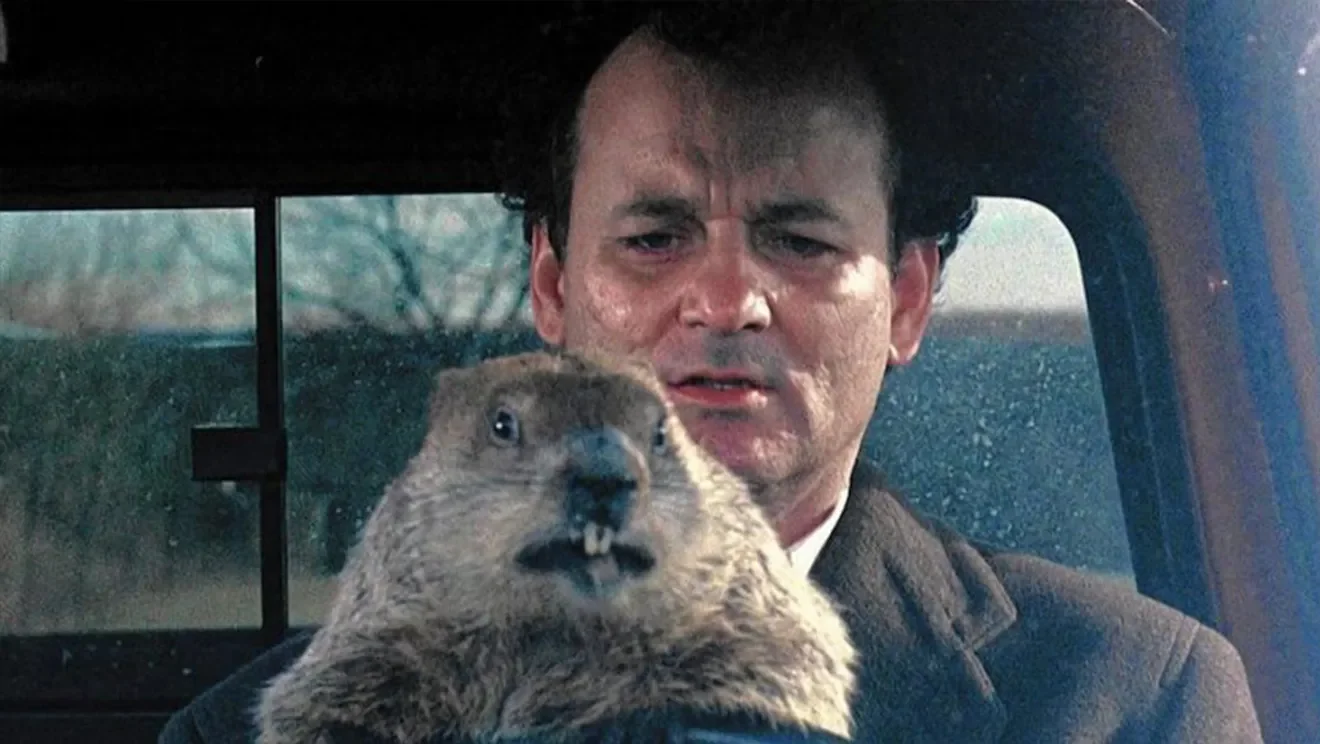
Figure 1: Billy Murray in Groundhog Day [1].
Some would agree that certain films do not age well. Either the humor was too specific for its time or the computer graphics were not good enough to compete with newer films, but Groundhog Day, more than 30 years old, is an exception. It’s timeless. And that is not a pun.
In the movie the main character, Phil, a weather man, finds himself in a type of time loop where he wakes up every morning in a hotel in Punxsutawney, Philadelphia at 6 AM on Groundhog Day expecting to report the less-than-exciting news, at least to him, of whether the groundhog will see his shadow and thus predict if winter will last for another six weeks or not. Other movies since then have explored this time loop concept (e.g. Tom Cruise’s Edge of Tomorrow), but Groundhog Day is the pioneer.
At first, Phil, played by actor Bill Murray, is bewildered by this phenomenon, but after some confusion, he progresses through various stages in his response to this time loop of waking up and repeating the same day every day. His knowledge and memory, and even the skills he acquires each day, persist into the following day, but this happens only for him and no one else in the city. As a result, he experiments first with hedonistic appetites, including money, power, and sex. In one scene, at a point of extreme frustration, he considers death as a way to escape the time loop. But no matter what he tries, he always starts back at the same time on the same day with nothing gained except his memory, knowledge, and skills.
Eventually, his motives and actions turn from self-serving to selfless. He starts using his skills to help others. He saves a choking woman with the Heimlich maneuver, catches a boy falling out of a tree, and helps a lady fix her flat tire. Every day. Over the likely “years’’ of being stuck in this day, he becomes a master of the piano, an expert in ice sculpting, and learns to speak French.
Ultimately, his motives develop further and turn from service to love. After so many days, he genuinely falls in love with the people in the community and is even saddened when he cannot save a certain homeless man. The character arc and development are fascinating to observe if one is looking for it.
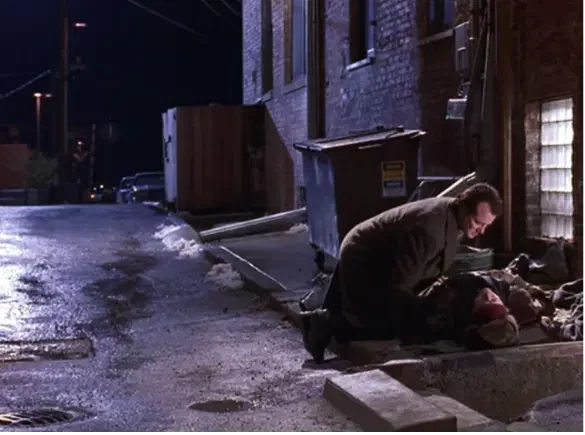
Figure 2: Phil trying to save the life of a homeless man [2].
I will refrain from spoiling the ending, and leave it for you to watch (or hopefully rewatch), but I do want to share a few lessons I see connected to the topic of engineering design.
The first is that any great product, even if that product is yourself, takes time and many iterations. Some have estimated that Phil was stuck in the time loop for 30-40 years. Many of us wrongly think that after a few tries or a few iterations, our product or project should be complete. In reality, we may need to multiply our attempts 10x or even 100x before we find ourselves successful. There are more than enough quotes about increasing the number of failures so that we can succeed. Here are a few of them.
“The most certain way to succeed is always to try just one more time.”
“If you want to be successful faster, you must double your rate of failure. Success lies on the far side of failure.”
“The number one predictor of success for a very young startup: rate of iteration.”
Despite our knowledge of these principles and perhaps experience with them, we still seem to struggle with their implementation in our lives. I know I do. The fastest way to the summit of success is through the long forest of failures and iterations. In the movie, Phil demonstrates this time and again. Like him, we will also have long periods of despair and frustration. If we give up, we will miss out on the necessary iterations that will bring us success. We do not know when it will come, so we should persevere regardless. Phil does not have a choice and is forced to relive the same day over again. But we do have a choice, and we should choose to iterate and try again despite the fact that we do not have access to this time loop. If we can somehow trick ourselves into not giving up until something is done, we may find success coming our way a little more often.
The creators of the movie were careful to include many details that are not apparent at first. For example, Phil’s style of dress becomes more refined as his attitude and personality grow throughout the movie. The camera shots and lighting during the film become smoother and warmer. And the director made sure that the extras and other people Phil was interacting with were sure to precisely repeat their motions and actions each day, so it appeared indeed that each day was identical from Phil’s perspective. If these details were not there, Groundhog Day would be much less plausible, even with the suspension of disbelief, and would not be as successful. Essentially, the lesson is that details matter. Once the underlying function of a product is there, customers will next turn to the details, the features, the extra things, to compare and contrast against other choices. They might not even be able to point out the differences or why they like something, but subconsciously, some products feel better, exude quality, and appear more polished. Sometimes the little things really do count (without sacrificing the core functions).
Lesson three is that it takes different opinions, different perspectives, and different people to make a good product. In the making of the movie, it was reported that Bill Murray and the director, Harold Ramis, clashed multiple times on multiple topics while filming. One of them wanted to do this, and the other wanted to do something different. Probably the decisions and concessions went both ways. Unfortunately, the feud, as a result of the many disagreements, lasted many years, but finally ended in a reconciliation. Although the aftermath of the partnership was not perfect, having tough discussions and bringing up contrarian positions to each other on choices related to the movie probably made it better. If there is only one choice for a decision, how can one ever defend the position that they chose the best option? Choices, by definition, require at least two or more options, and these options can come from a variety of people’s minds. Therefore, if we want to make good choices, it may be in our best interest to ask a lot of people their opinions and even seek out opinions that are very much opposed to our own. None of us should think we have a monopoly on all good ideas. In fact, we should be humble enough to realize some of our own ideas are very much inferior to others’, and we should collaborate with others as a result.
The fourth lesson is that growth and happiness come from purpose and helping others. That seems like a weird lesson to be sharing with design engineers, but the things we design and the products we produce should keep front and center the people who use and interact with these same products. Keeping the customer or the end-user in mind is a necessary step in good design. We will not be nearly as happy if we are not solving some problem of, or making life better for, some person in the world. It may be our customer base is a million people or just one, but if we are only designing for design's sake, we may eventually find our actions empty. In response, we may finally decide to become someone who wants to design with purpose, just as Phil decided to live with selfless purpose. The tinkering, the exploration, and the prototyping are all fun and even necessary to learn a trade or skill, but we can and must eventually convert those skills into helping others, through design, or we risk being less fulfilled like Phil in Groundhog Day, and unfortunately, we will not receive as many do-overs as he did.
Whether you enjoy the movie for its philosophical topics, the humor, or the inspiration, remember that Groundhog Day has a little to teach designers and engineers at the same time.
References
[1] Kiesewetter, John. "Where to Watch Bill Murray's 'Groundhog Day' Movie in 2026." The Cincinnati Enquirer, 1 Feb. 2026, www.cincinnati.com/story/entertainment/movies/2026/02/01/where-to-watch-bill-murray-groundhog-day-movie-2026/88194167007/.
[2] "Groundhog Day All Over Again." The Lorehounds, 1 Feb. 2024, thelorehounds.com/blog/goundhog-day-all-over-again.
To cite this article:
Salmon, John. “Groundhog Day and Lessons for Designers.” The BYU Design Review, 3 February 2026, https://www.designreview.byu.edu/collections/groundhog-day-and-lessons-for-designers.