Mathematics and Engineering Design
To many, even among students of design and engineering, math classes seem useless. To others, mathematics feels mystical and abstract, and even some engineering professors admit to being afraid of math at times. Despite that, math is essential to engineering and design as it enables engineers to predict and refine designs before building anything. Furthermore, processes of discovery and definition in mathematics offer many connections to processes evident in the design of physical objects.
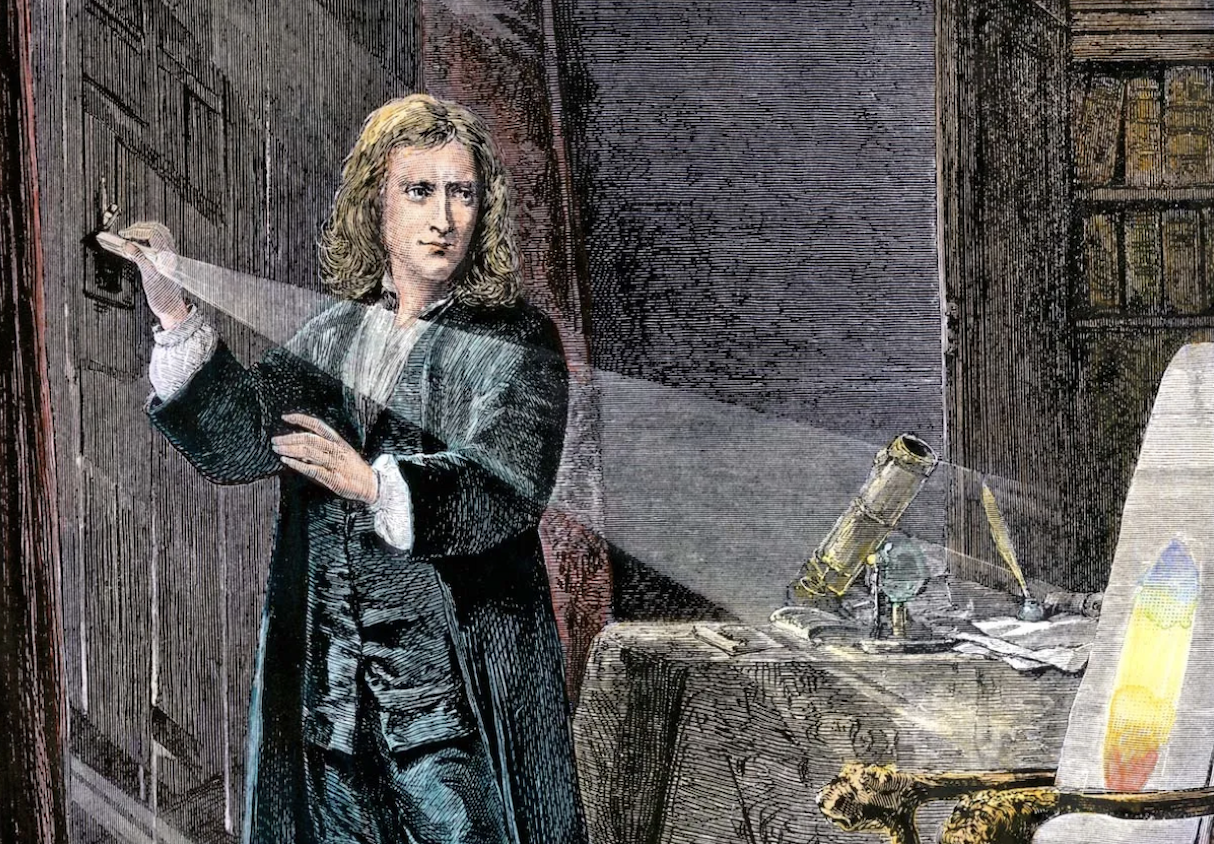
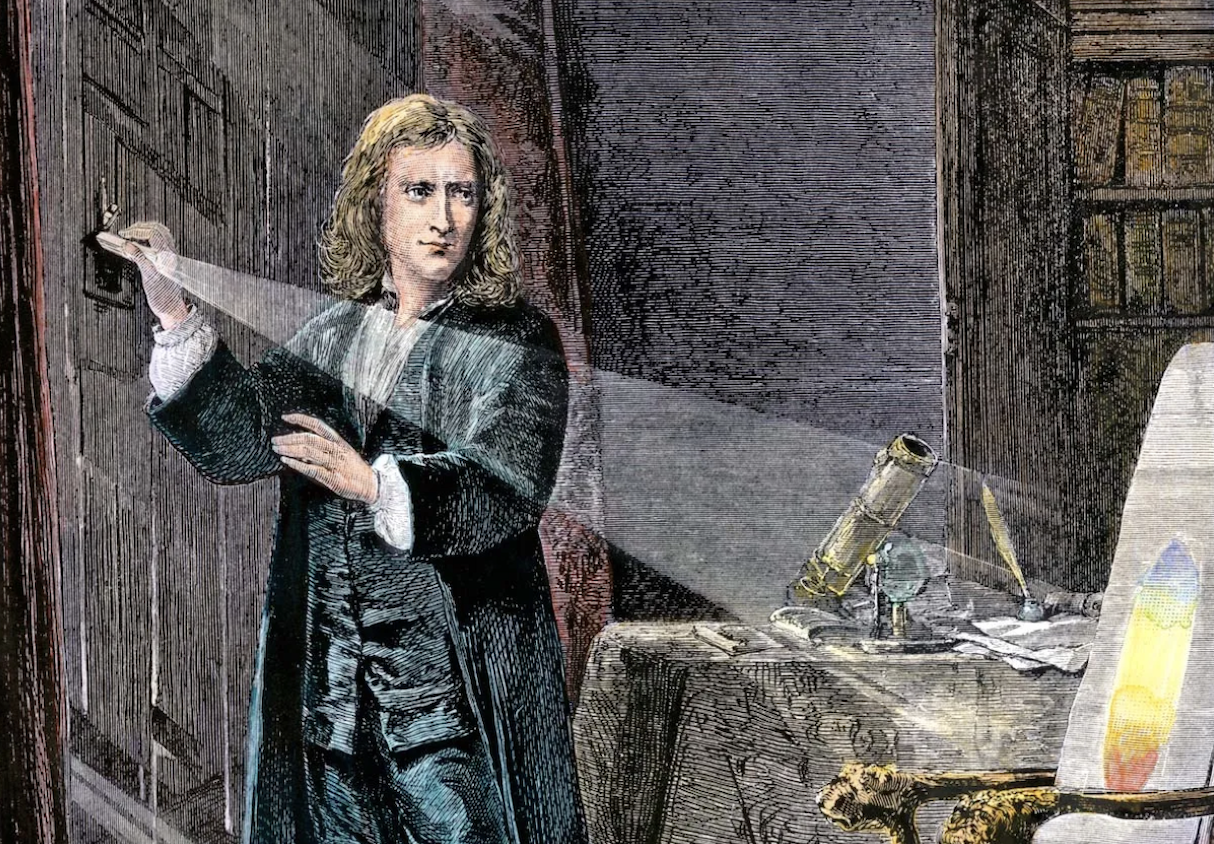
Figure 1: Isaac Newton, a mathematician and physicist, whose mathematical work is the foundation of many principles of modern engineering [8].
The language of math is extremely precise, allowing for ideas to be expressed in a repeatable and unambiguous way. Equations and formulas developed by scientists are tools that make predictions fundamental to good design. When an idea is expressed mathematically, it becomes an effective tool. In a similar fashion, when design follows principles seen in mathematics, it shows effective results. Ideas including discovery and definition are fundamental principles of mathematics and are clearly expressed in effective engineering design. Understanding these parallels between mathematics and design will allow math to feel less abstract and its tools to be used more effectively to create good designs.
Discovery
One clear parallel between mathematics and design is the role of discovery. A clear example of mathematical discovery can be seen with Paul Dirac, a physicist and mathematician whose math led to the discovery of antimatter. Dirac sought to mathematically reconcile quantum mechanics with special relativity. Starting with equations from Schrodinger and Einstein, he developed a new equation that gave results consistent with understandings of modern physics, but also allowed for solutions with negative energy. This seemed absurd, but was mathematically correct, even under scrutiny. Antimatter was later confirmed experimentally as well, but predictions of its existence are traced back to Paul Dirac and his mathematics. [1]
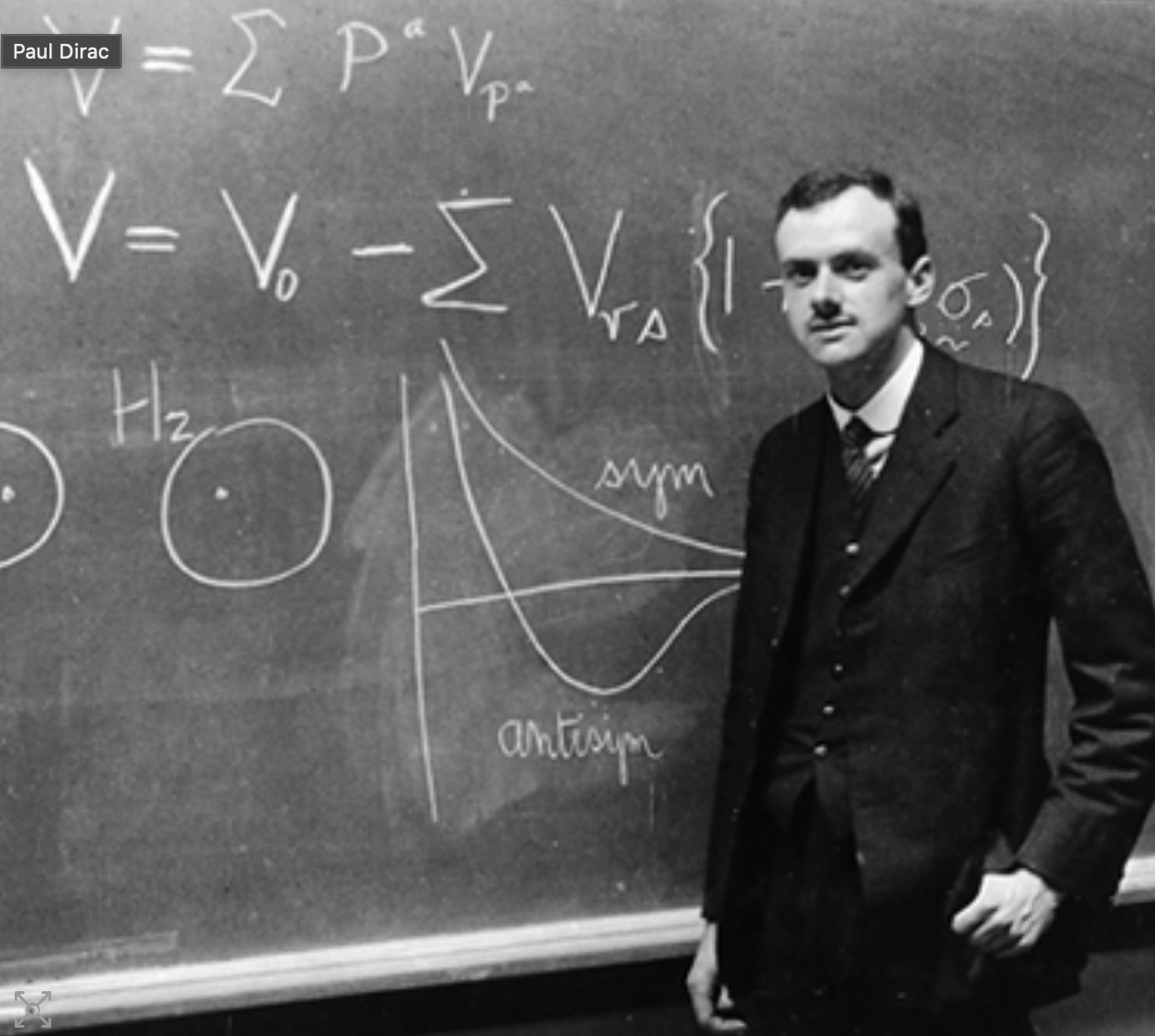
Figure 2: Paul Dirac [6].
Dirac was not seeking to discover antimatter, but rather to design an equation that solved a problem physicists faced, combining multiple conflicting theories and understandings. In that process however, he made a discovery that changed modern physics forever and allowed for a deeper understanding of the universe.
A similar process often occurs in engineering and design. Often engineers and designers attempting to solve problems will come across results they did not expect. These can be secondary results, such as the accidental discovery of Penicillin by Alexander Flemming who simply meant to study bacteria, or the invention of Post-it notes by an engineer who attempted to invent a very strong adhesive and created a very weak one instead [2]. Designers may also come across solutions to problems that are contrary to their understanding. For example, one might expect that the best bridges and skyscrapers will be incredibly sturdy, but results show that flexible designs survive better through extreme conditions.
Like mathematicians, engineers and designers should be open to discovery while creating. The best solutions to problems will not always be what one expects, and in the process of designing, anything might be discovered.
Definition
In mathematics, equations are also often created to define certain principles. Rather than observing something and expressing it through math or discovering something through the manipulation of numbers, an idea is created and math used to define that idea.
Precise definition through mathematics is a very powerful principle of math and can be seen in the work of Isaac Newton in physics. Before Newton, terms such as force and pressure were not standardized and it was difficult to form a uniform understanding of ideas such as object motion.[3] In his Second Law of Motion, Newton declared that a force is a mass multiplied by an acceleration. Though this concept seems incredibly simple, its beauty and usefulness lie in what it defines. Every force acting on a mass causes an acceleration. Every accelerating mass is experiencing a force. The definition stated in his law of motion allowed for force to be a specific idea that could be predicted and applied to any number of scenarios. This was also a discovery on Newton’s part, but the formula F = ma defines how we understand the universe and predict motion.[4]
Many good designs outside of mathematics change how we define things in the world. A clear example is the iPhone. Before the iPhone, mobile devices had a large variety of appearances. Nowadays, even competitors to the iPhone have a similar aesthetic. In essence, the iPhone defined the design of modern smartphones.

Figure 3: Current high end phones from Samsung, Google, and Apple [7].
Shipping containers are another example. Originally, they were designed to make shipping easier by standardizing the containers used for sending items overseas. They were so effective however, that ships, trucks, trains, and ports were later designed to fit the standard shipping container. Billions of dollars of infrastructure and the standard of shipping on water and land now exist because a single design was exceptionally effective. [5]
Good designs define things in the world. Like how a well designed equation defines how we understand the universe, a well designed product defines how future products and ideas work.
Design as Math, Math as Design
Mathematics shows us that design can result in discovery and definition. As engineers and designers engage in the creation of new ideas and the solving of problems, they should consider how their designs, like mathematics, could lead to unexpected discovery and how those designs can define standards and methods for future engineering.
Though it can often be abstract and even seem mystical, understanding the language of math leads us to incredible understandings of our universe. It is a tool that like any other good tool beautifully solves problems it was created for. Understanding parallels between mathematics and engineering design will demystify math and help anyone become a more effective designer.
References
[1] "The Dirac Equation." YouTube, uploaded by Physics Girl, 22 May 2015, www.youtube.com/watch?v=Y-W-w8yNiKU.
[2] Lamb, Robert, and Patrick J. Kiger. "15 of the Coolest Accidental Inventions." HowStuffWorks, 21 Sept. 2023, science.howstuffworks.com/innovation/inventions/15-of-the-coolest-accidental-inventions.htm.
[3] Gleick, James. Isaac Newton. Vintage Books, 2004.
[4] "Newton's Laws of Motion." Glenn Research Center, NASA, 20 Aug. 2024, www1.grc.nasa.gov/beginners-guide-to-aeronautics/newtons-laws-of-motion/.
[5] "How the Modern-Day Shipping Container Changed the World." Office of Response and Restoration, National Oceanic and Atmospheric Administration, 21 Apr. 2021, response.restoration.noaa.gov/about/media/how-modern-day-shipping-container-changed-world.html.
[6] "Paul Dirac: The Purest Soul in Physics." Physics World, 1 Nov. 2009, physicsworld.com/a/paul-dirac-the-purest-soul-in-physics/.
[7] Snell, Jason. "What Android Phones Can Teach the iPhone." Six Colors, 24 Feb. 2026, sixcolors.com/post/2026/02/what-android-phones-can-teach-the-iphone/.
[8] Westfall, Richard S. "Isaac Newton." Encyclopædia Britannica, Encyclopædia Britannica, Inc., 18 Feb. 2026, www.britannica.com/biography/Isaac-Newton.
To cite this article:
Stubbs, Ian. “Mathematics and Engineering Design.” The BYU Design Review, 8 Jun 2026, https://www.designreview.byu.edu/collections/mathematics-and-engineering-design.