Lessons Learned From Soichiro Honda
Last summer I decided to buy a motorcycle. I had no prior experience or knowledge of motorcycles, but I found a cheap one online. I spent the summer fixing it up, painting it, and riding it. The motorcycle I bought was the 1980 Honda CM200T. Since working on this motorcycle and now being a proud owner, I have become interested in not only motorcycles but also the story of Soichiro Honda. Soichiro Honda was born to a poor Japanese family in the early 1900s. Starting with little money and hardly any education, he went on to build one of the most successful automotive companies in the world, beginning with motorcycles. He was able to achieve this because he was a curious learner, he sought hands-on experience, and fearlessly took risks to follow his dreams.
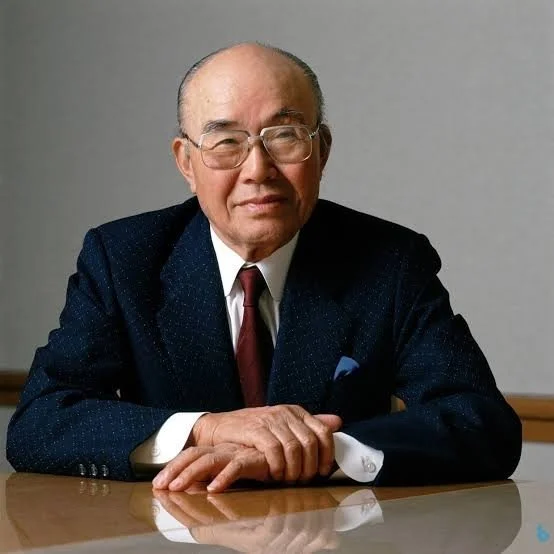
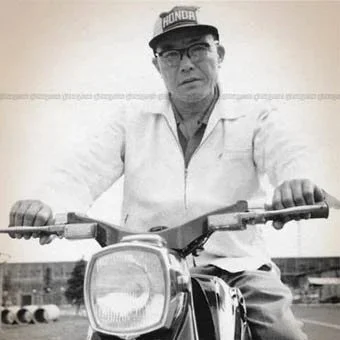
Figure 1: Soichiro Honda [1].
Soichiro was interested in machines from a young age. This curiosity was demonstrated in one occasion when he took his father’s bike, and though not able to reach the pedals while on the seat, he went to see an airplane demonstration a few miles away. Upon arrival he realized he did not have enough money to enter the demonstration, so he climbed a tree and watched intently from a distance. In his teenage years, Honda left school and went to work for an automotive company in a relatively nearby city. Though he was not allowed to work on the cars initially, he worked patiently until his turn finally came to get his hands dirty. He became a trusted mechanic to the owner and developed skills that would prepare him to one day start his own business in the automotive industry. Honda’s life was filled with trial and error, as he usually bit off more than he could chew. After working as a mechanic he started his own company manufacturing piston rings. It proved to be more difficult than he anticipated, but he found ways to learn and make a profit. This pattern of diving into problems head first helped him to become a great engineer and design some of the coolest machines of his time.
As problem solvers, engineers, and designers, whatever challenges we tackle in life requires a high degree of curiosity. Curious people learn things that others do not care to think about. They spend time pondering concepts that most do not. Curious learners ask questions and are not satisfied until they fully understand. When designing a product, we must seek to understand the entire problem and the entire solution. We may be tempted to avoid learning because of the hard work it takes to understand. Instead, we can let our curiosities help guide and motivate us to learn new things. While doing a project this semester, I saw this principle in action. We were asked to build and code a small robot that could perform simple tasks. While working on this project I noticed some students really tried to fully understand the code, while others made suggestions but did not really care about understanding. Those that were curious learned more and had a greater impact on our team. Honda was a great example of letting curiosity lead him to discoveries.
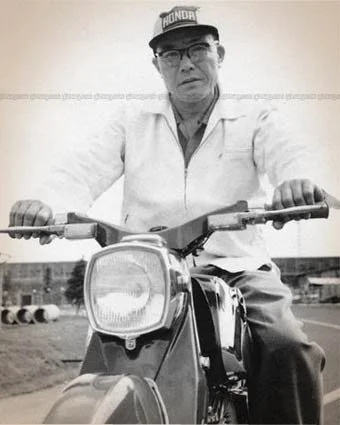
Figure 2: Mr. Honda on one of his motorcycles [2].
Oftentimes a formal education is seen as the path to success. While it plays a crucial role, I have noticed that the things we learn on our own time, and of our own interests, can often teach us the most. As I worked on my motorcycle this summer, I began applying principles that I had only previously heard in class. For the first time I felt like I was understanding concepts I thought I had already learned. While this could be dependent on the type of learner of an individual, Honda demonstrated the importance of learning by experience. Without much formal education he was able to design and build some of the best motorcycles. He learned through doing. Through trial and error he gained invaluable skills that could only be attained through physically working on the machines. As designers and engineers we should follow his example and get our hands a little dirty from time to time. Being hands-on learners, in combination with a formal education, can help us to invent products that will impact the world.
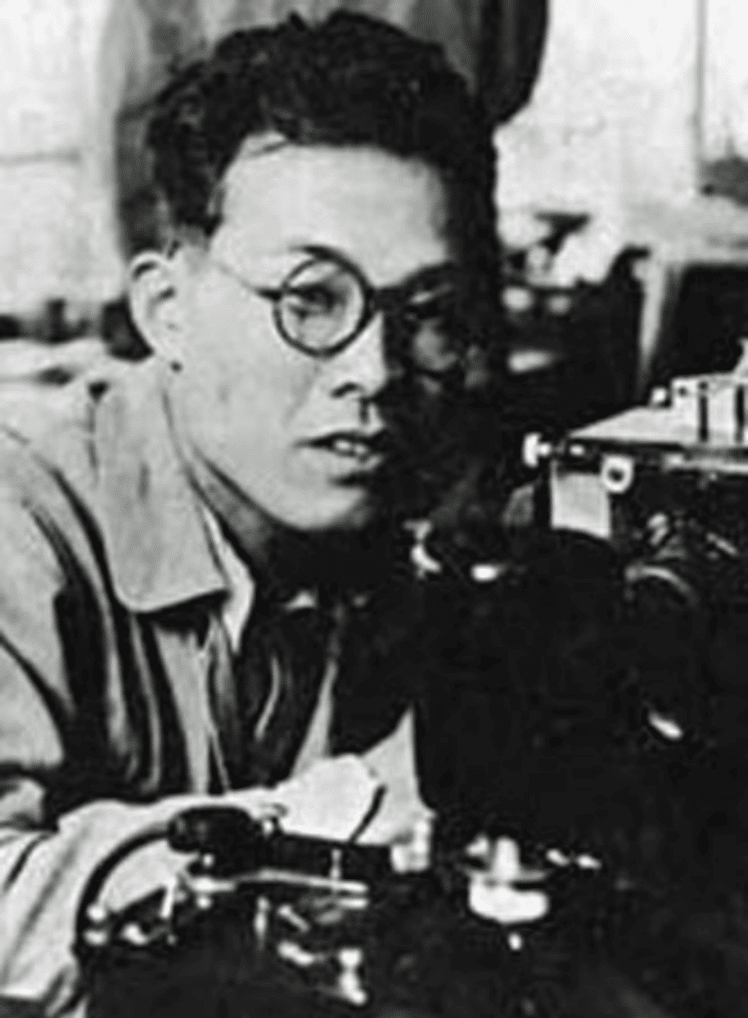
Figure 3: Mr. Honda at work [3].
Lastly, we should be fearless like Honda. From leaving his family as a teenager to work full-time, to starting his own companies with minimal experience, Honda demonstrated great courage. Though he may not have been fully ready for the challenges ahead, he fearlessly pursued them. Like him, we should not let fear hold us back. We may worry that we are not good enough for a job we want or that other applicants are better than we are. There are many fears like these that can hold us back, but we should not listen to them. As with Honda, we will fail, and that part is inevitable. Also like Honad, we should fearlessly continue to pursue our goals and dreams. We will have to take some risks. We will be rejected along the way. But if we are fearless, then our mistakes will be stepping stones to our successes.
Designing and building products that are used many years later, like a 1980 Honda motorcycle, is quite the accomplishment. Though it may be difficult, we can do it by being curious, jumping in to gain hands-on experience, and pursuing problems fearlessly like Honda did.
References
[1] Abosi, Chukwuemeka Ugbor. “The Story of Mr. Soichiro Honda.” LinkedIn, 2 Aug. 2021, www.linkedin.com/pulse/story-mr-soichiro-honda-chukwuemeka-ugbor-abosi/.
[2] “Soichiro Honda.” ASME, American Society of Mechanical Engineers, www.asme.org/topics-resources/content/soichiro-honda. Accessed 22 Dec. 2025.
[3] Printz, Larry. “The Rearview Mirror: The Death of a Japanese Rebel.” The Detroit Bureau, 6 Aug. 2022, www.thedetroitbureau.com/2022/08/the-rearview-mirror-the-death-of-a-japanese-rebel/.
To cite this article:
Heiner, Taylor. “Lessons Learned From Soichiro Honda.” The BYU Design Review, 22 December 2025, https://www.designreview.byu.edu/collections/lessons-learned-from-soichiro-honda.