Good Design: Cooking Moist Turkey
Every fourth Thursday of November in the United States, schools and workplaces close down so families can come together to eat turkey, mashed potatoes, stuffing, cranberry sauce, pumpkin pie, and so much more at Thanksgiving dinner. However, this feast brings a problem with it that makes some people dread Thanksgiving or even stray away from traditional Thanksgiving dinner fare completely: it is very easy to overcook a turkey, which makes it dry and difficult to chew. My extended family on my dad’s side dislikes dry turkey so much that every Thanksgiving, they completely abandon turkey in favor of prime rib! While I agree with them that eating dry turkey is not pleasant by any means, I also think that trying to keep a turkey moist is a worthwhile endeavor. So, we will take a look at the specifics of the dry turkey problem, as well as some cleverly designed methods for cooking a perfectly moist and juicy turkey so you never have to eat dry turkey again.
The Dry Turkey Problem
The main reason why turkey is easy to overcook is its size. A supermarket turkey can weigh anywhere from 8-24 pounds, and for reference, the average whole chicken at a supermarket weighs between 3-4 pounds. Additionally, turkeys are most commonly cooked the same exact way as whole chickens are cooked: roasted in the oven. When both birds are roasted in the oven, the outer cuts of meat that are more exposed to the oven’s heat cook faster than the inner cuts. By the time the inner cuts reach a safe to eat temperature, the outer cuts are overcooked and consequently dry. Since turkeys are so much larger than chickens and have to stay in the oven for much longer, this drying effect is much more pronounced in turkeys [1].
The Solution
As we discussed above, it is very easy to overcook a turkey, but do not despair! There are several methods you can implement this Thanksgiving that will make sure your turkey is perfectly juicy. Before we discuss specific methods, let’s go over some general tips that are useful regardless of what specific method you choose:
Use a meat thermometer so you know exactly when the turkey is done cooking to avoid overcooking it.
If using a frozen turkey, thaw the turkey completely before cooking so it can cook evenly.
After cooking, let the turkey rest while covered for at least 30 minutes so the juices that were brought out during cooking can reabsorb back into the meat.
Now, we will dive into the specific methods.
Spatchcocking
To spatchcock a turkey, remove the backbone, place the turkey breast side up, and press down on the turkey so the ribs crack and the turkey lies relatively flat. Making the turkey lie flat spreads out the meat and allows for more uniform cooking. You can then season as desired and roast the turkey normally in an oven, except it will not take nearly as long as it would for a turkey that is not spatchcocked since all of the meat has more direct access to heat.
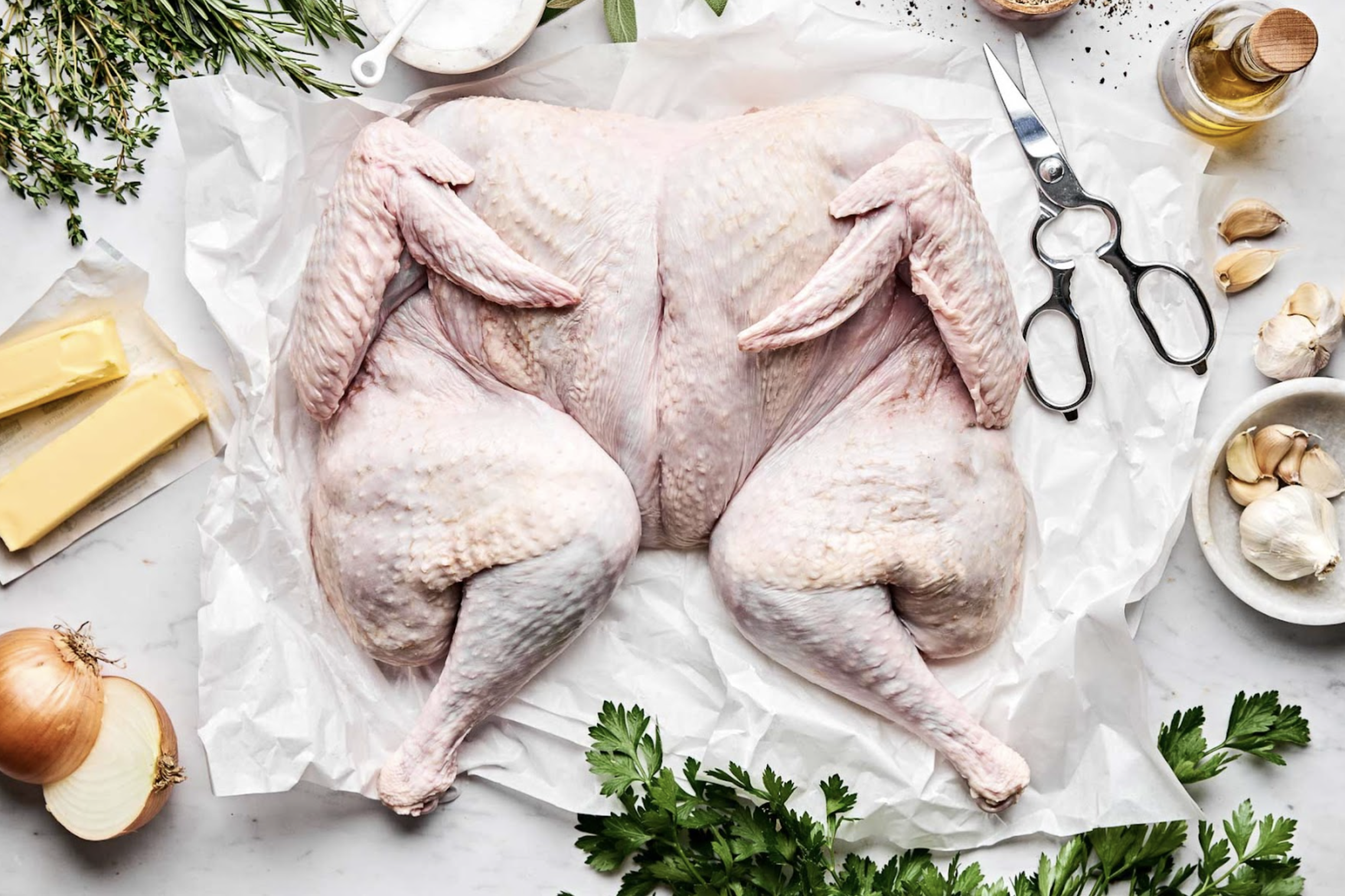
Figure 1: Spatchcocking a turkey allows it to lie flat which promotes even cooking and less time in the oven [2].
Brining
To brine a turkey, place it in a brine bag and fill the bag with enough salty brine to completely cover the bird. Then, let it sit in the fridge anywhere from 12-24 hours before removing from the bag and roasting in the oven. In addition to infusing the bird with flavor throughout, the salt in the brine breaks down the muscle fibers and helps them retain more moisture during the cooking process [3].
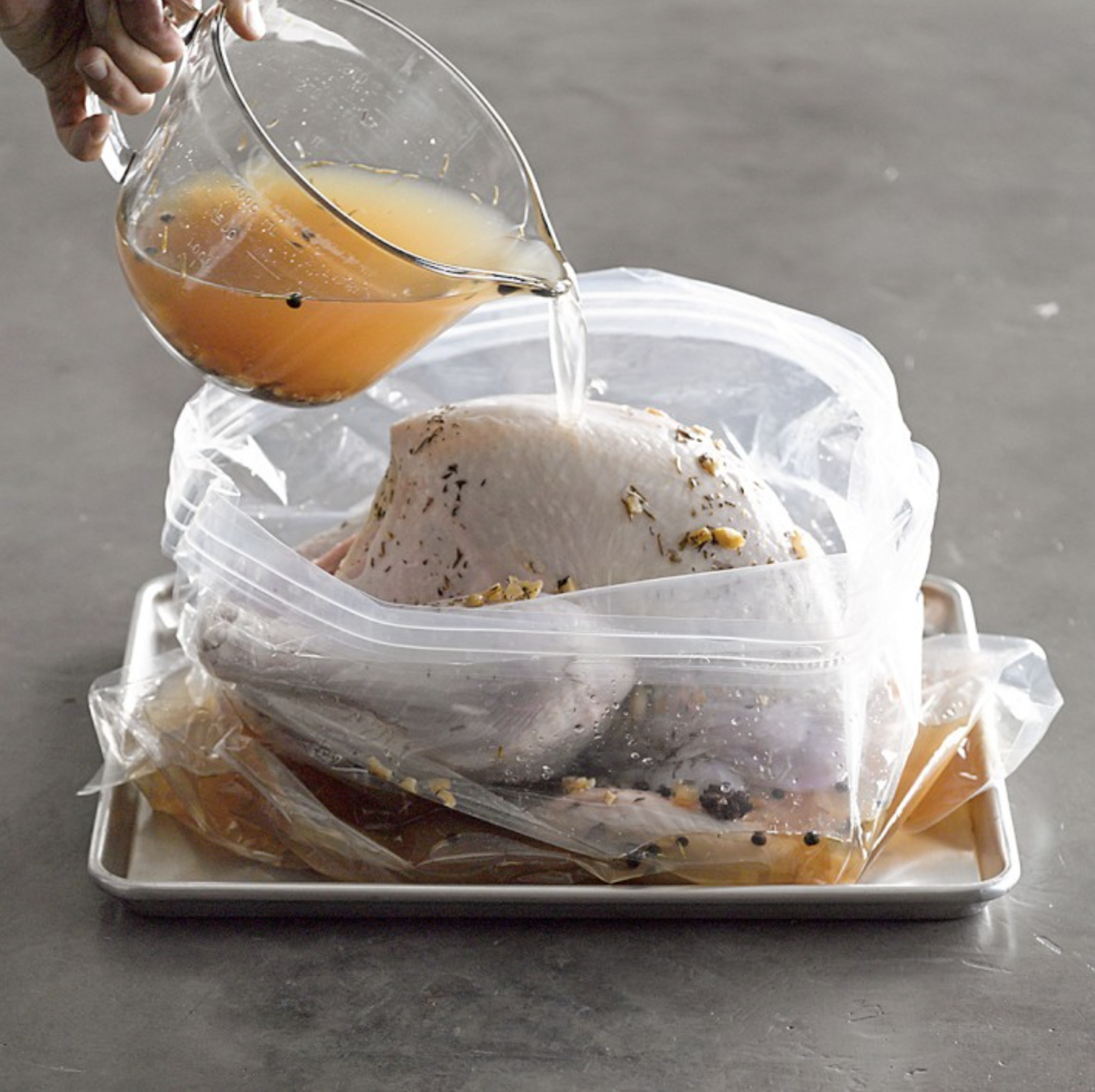
Figure 2: Brining a turkey in a brine bag [4].
Dry Brining
Dry brining is the easier and less messy version of brining that still produces perfectly moist turkey. The part of the turkey that needs the most help retaining moisture is the outer layer, which is what dry brining targets. To dry brine a turkey, combine salt with any seasonings you like and then rub that mixture on the entire outer surface of the turkey. Before putting it into the oven to roast, let it sit in the fridge for at least an hour so the salt can penetrate into the outer layer of meat, making it retain more moisture during cooking. This strengthened outer layer also shields the inner layers from excess heat [5]. Both of the brining methods can also be combined with spatchcocking for the ultimate turkey.
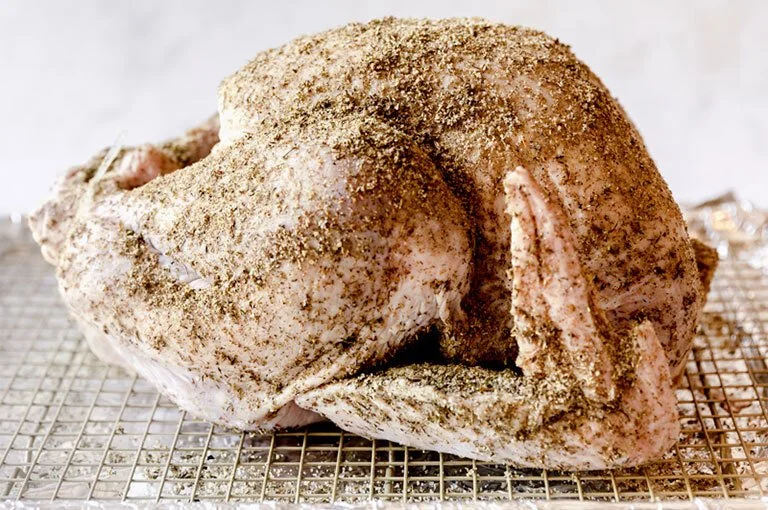
Figure 3: A dry brined turkey [6].
Deep Frying
Deep frying is probably the most fun method we will learn about today, but it is definitely the most dangerous. Why does it always seem like those two things coincide? To deep fry a turkey, you will need a more robust set up than the previously discussed methods. Since this is a more dangerous method, I would recommend researching more of the specifics of this process before you give it a go, but I will just provide a brief overview of the process here and why it is great at producing moist turkey.
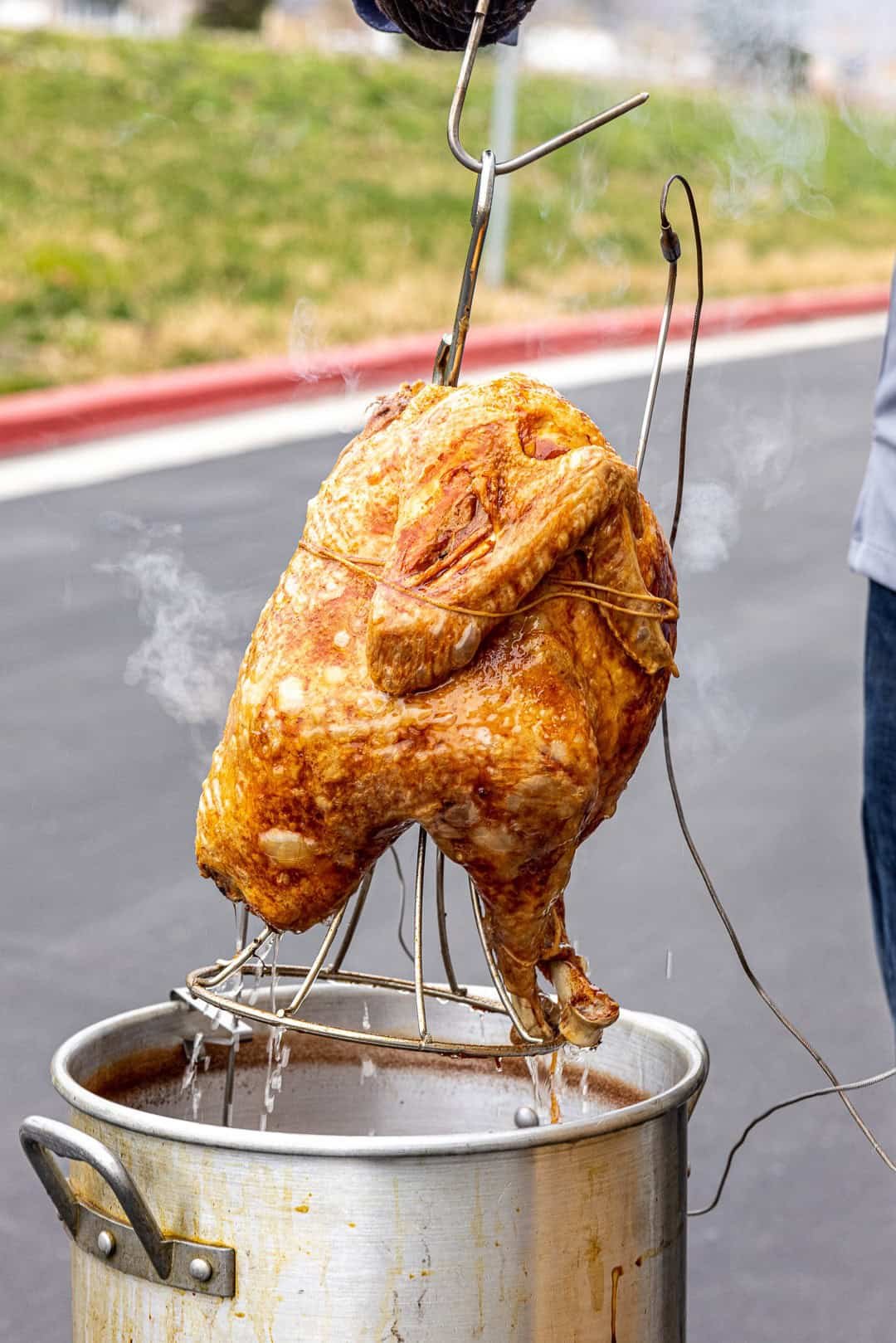
Figure 4: A proper set up for deep frying a turkey [7].
Deep frying a turkey does not require making a batter, you just need to season your turkey, lower it into a pot of bubbling oil, cook it for 3 to 4 minutes per pound, and season again after removing from the oil. Deep frying a turkey does not take nearly as long as roasting, and since it cooks the turkey evenly (it is entirely submerged in the oil and cooks from the inside and outside), there is a reduced chance of drying out the outer cuts of meat. Also, when the oil first comes in contact with the meat, it creates a barrier that prevents any moisture inside the turkey from escaping [8].
Conclusion
Thanksgiving is primarily celebrated in the United States, and turkey is not readily available in every part of the world, but no matter where you are reading from, I hope you have been able to learn two things:
How to cook a moist turkey (that’s what the article is titled after all) when the opportunity arises.
Looking closer at a problem always paves the way to more effective solutions.
Happy Thanksgiving from the BYU Design Review, and hopefully you never have to eat dry turkey again!
References
[1] "Talking Turkey." USDA, www.usda.gov/about-usda/news/blog/talking-turkey.
[2] "How to Spatchcock Turkey." Plays Well With Butter, playswellwithbutter.com/how-to-spatchcock-turkey/.
[3] "The Food Lab: The Truth About Brining Turkey." Serious Eats, www.seriouseats.com/the-food-lab-the-truth-about-brining-turkey-thanksgiving.
[4] "Brining Bag Set." Williams-Sonoma, www.williams-sonoma.com/products/brining-bag-set/.
[5] Hough, Jill. "Why Dry Brining Is the Best." jillhough.com, jillhough.com/why-dry-brining-is-the-best/.
[6] "How to Dry Brine a Turkey." Shady Brook Farms, shadybrookfarms.com/cooking-how-to/how-to-dry-brine-a-turkey/.
[7] "Deep-Fried Turkey: Made Safe & Delicious." Thermoworks Blog, blog.thermoworks.com/deep-fried-turkey-made-safe-delicious/.
[8] "Why You Should Deep-Fry Turkey This Thanksgiving." America's Test Kitchen, www.americastestkitchen.com/articles/4030-why-you-should-deep-fry-turkey-this-thanksgiving.
To cite this article:
Ipsen, Blake. “Good Design: Cooking Moist Turkey.” The BYU Design Review, 19 November 2025, https://www.designreview.byu.edu/collections/good-design-cooking-moist-turkey.