Explained: Haptic Vibrations for Phone Notifications
In the modern age of information, we use notifications to stay on top of our busy calendars and multiplicity of tasks. Long before the introduction of the smartphone, a common issue faced by consumers of pagers and mobile phones was the need to promptly see notifications without constantly checking or listening to a loud noise. This was solved by vibration, a haptic system embedded into the phone to alert the user without needing to see the screen. Motorola was the first company to introduce technology to solve this issue with vibration [1, 2]. Vibration was thus later used in smartphones. Vibrating notifications have become so successful that its distracting effects are almost indistinguishable from normally using a phone [3]. This article explores the functionality of haptic and micro-vibration systems.
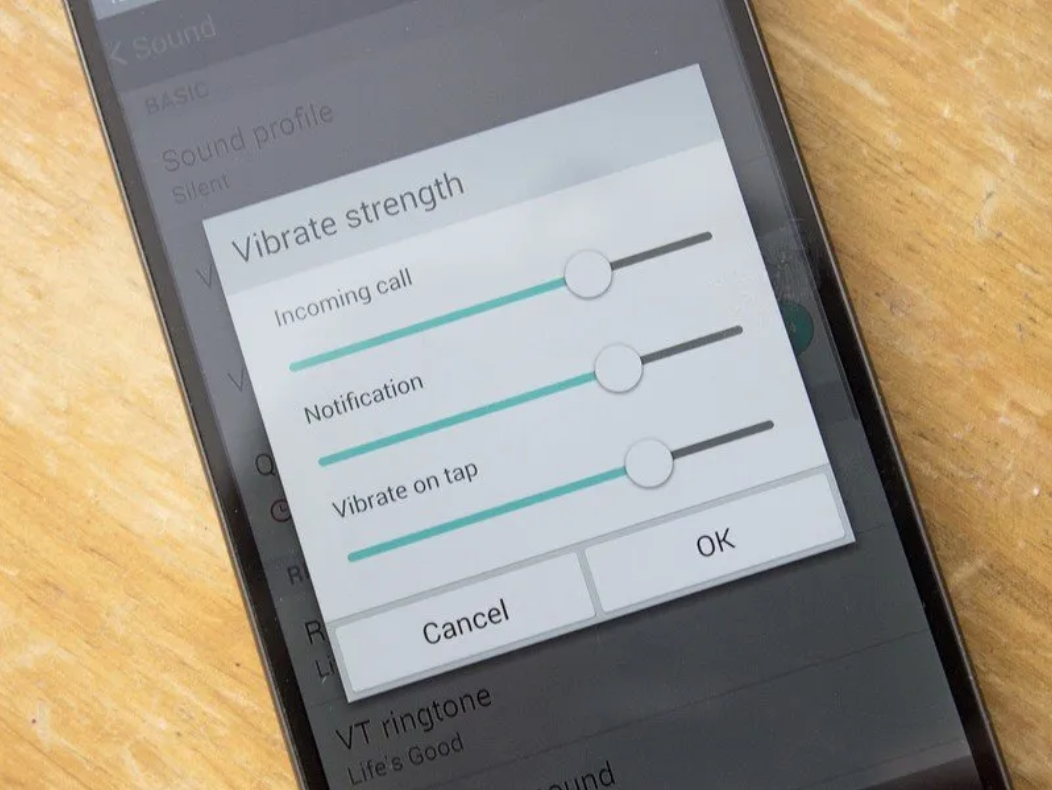
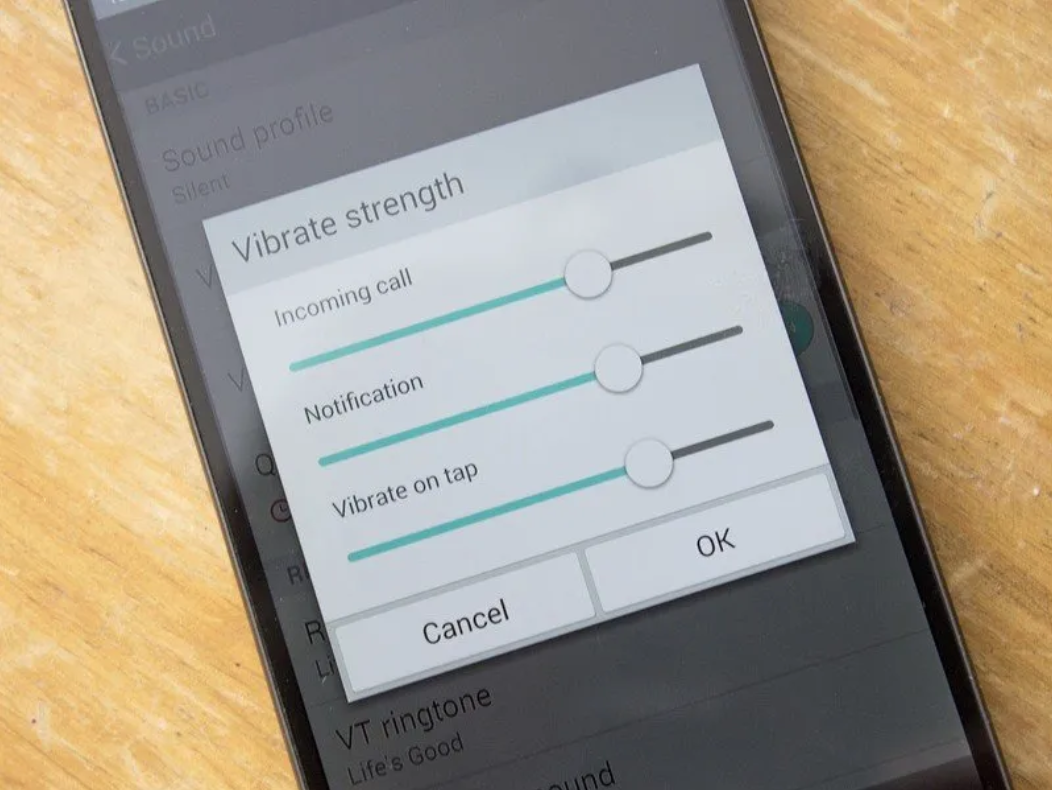
Figure 1: Vibration settings on a smartphone [4].
The Need for Notifications
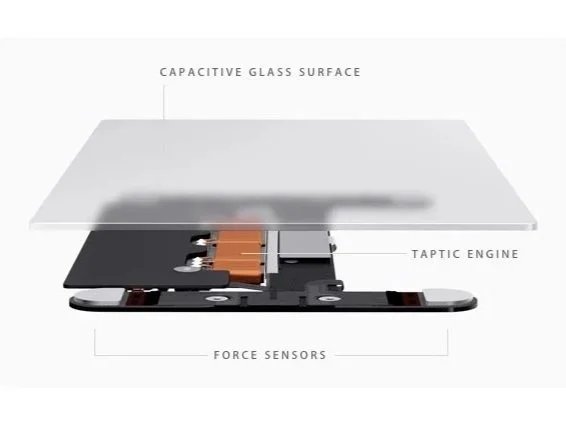
Although notifications have real practical benefits for the consumer base, producers have also been motivated to include them in smart technologies to increase consumer usage [5, 6]. In fact, researchers have poured hours of time and thousands of dollars into perfecting notification systems, and vibrating systems are one of the primary modes for delivering notifications. This has propelled haptic technology, which involves the mechanics of simulating touch (such as vibration), to the forefront of consumer device development [7]. While a device like a keyboard actually involves pushing a button, the click of a trackpad is a simulated, haptic actuation.
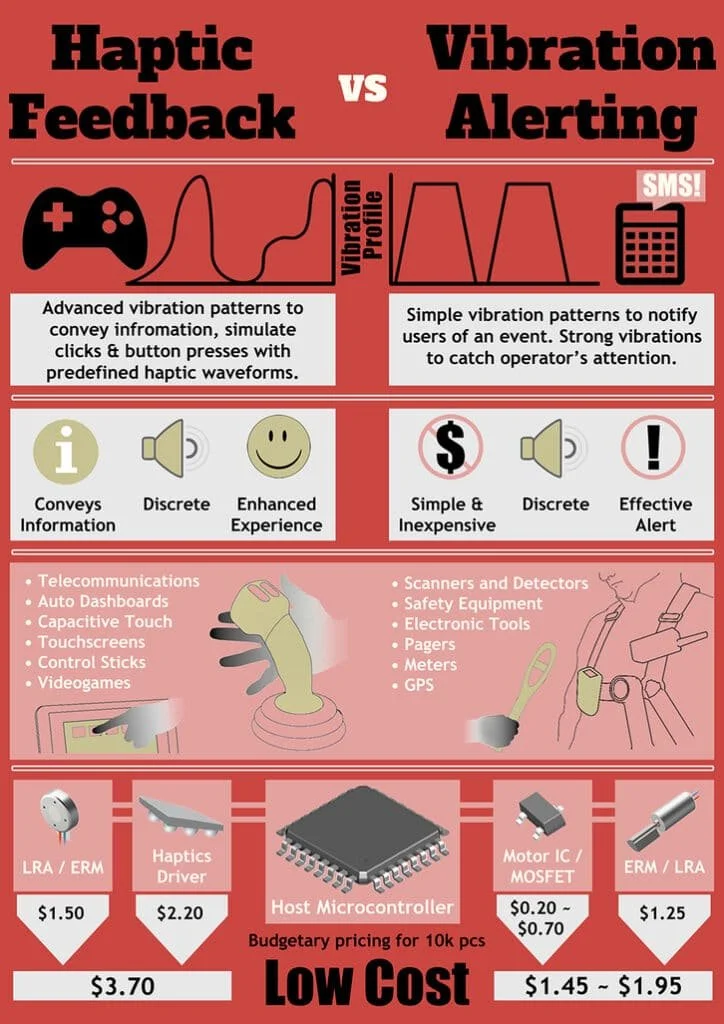
Figure 2: An infographic display comparison of haptic and vibration systems [8].
Haptic Technology
In discussions about the nuances of haptic technology, some companies refer to haptic technology as the more sophisticated version of vibration systems, as illustrated in the figure above. The difference of sophistication is usually with regard to the waveform, or complexity, of the vibration pattern [8]. Most vibration patterns are generated by three types of actuators: eccentric rotating mass (ERM), linear resonant actuators (LRA), and piezoelectric actuators. The former two tend to be more simple vibrating mechanisms, while piezo actuators are used for the most complex haptic systems [9].
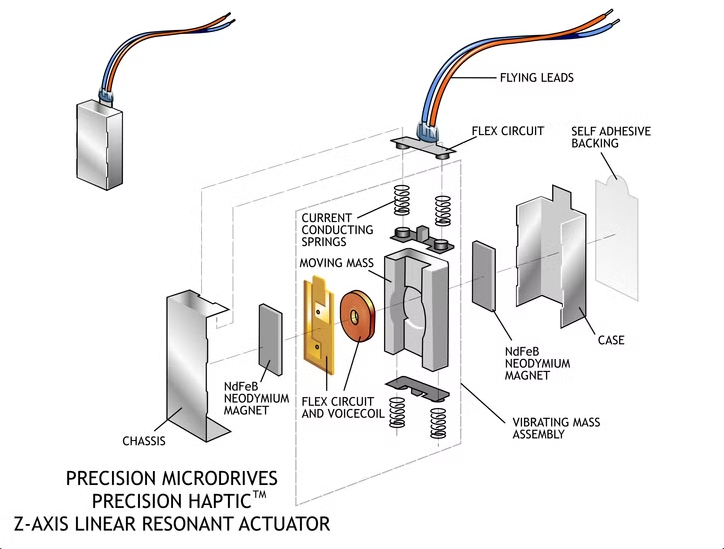
Figure 3: An LRA vibration system.
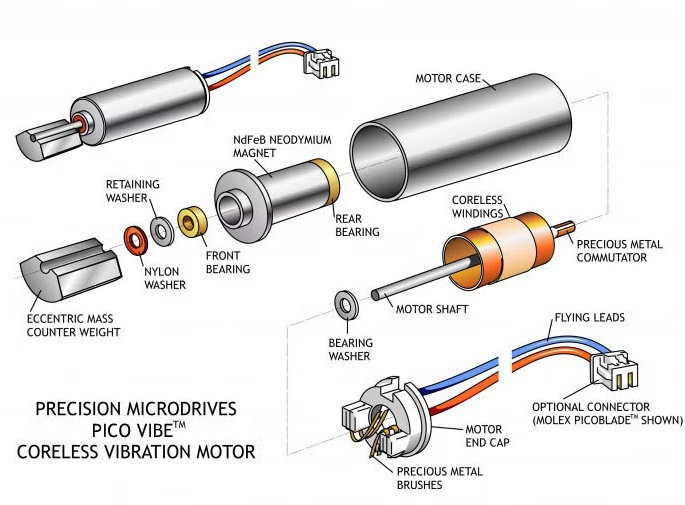
Figure 4: An ERM vibration system [7].
ERM systems work by rotating an eccentric, or off-center, mass around a motor. Rotating the mass creates an imbalance, vibrating a device. LRAs are extremely efficient, as they use technology similar to loudspeakers to drive a magnet at a resonant frequency. However, they have a start up and slow down time, meaning their signal is not particularly sharp. Finally, piezo actuators are ceramic elements that use a voltage to deflect. They are highly controllable and represent the highest-end haptic systems [10, 11].
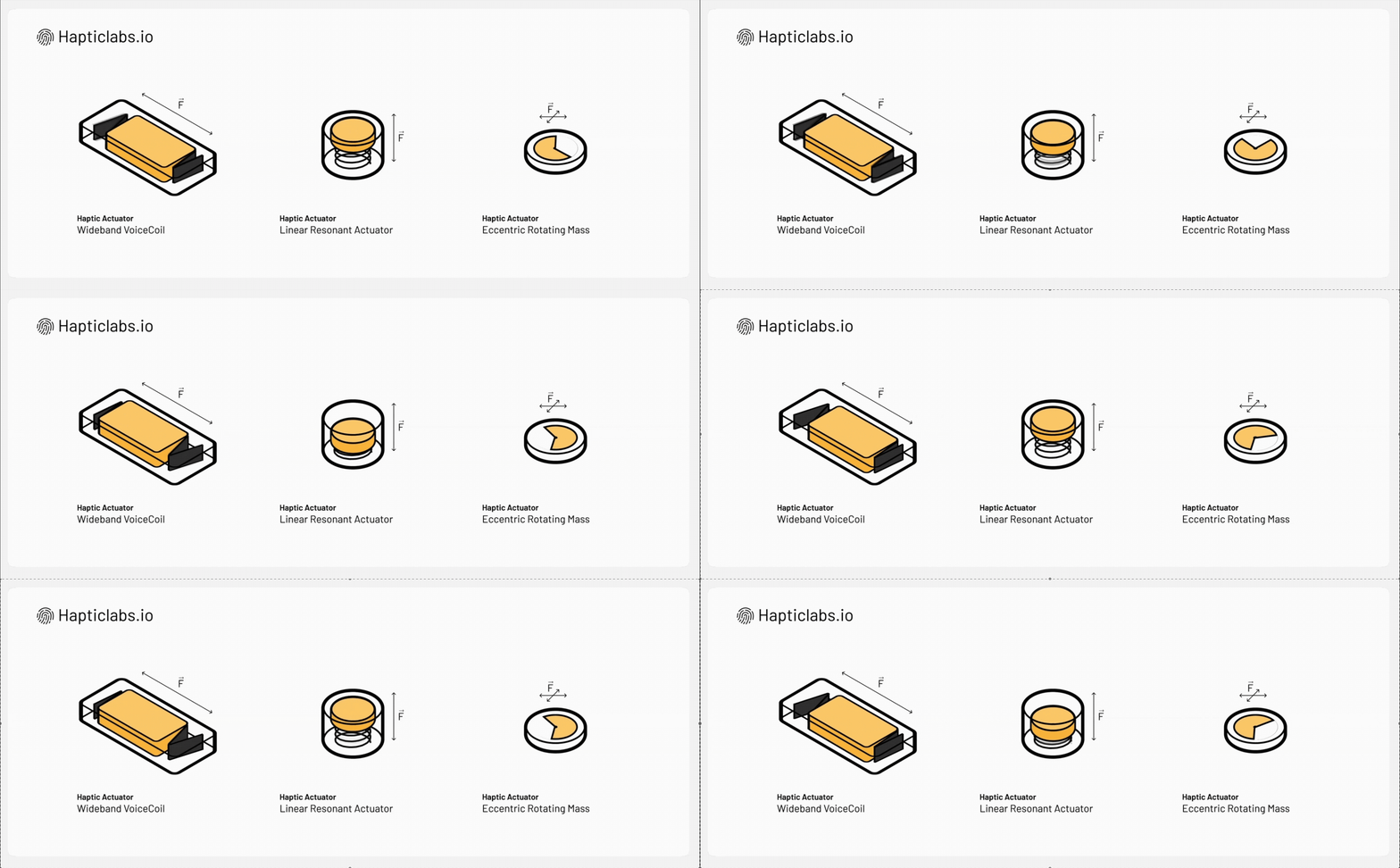
Figure 5: A representation of the common configuration of haptic actuators in smartphones [12].
With new smartphone models coming out every year, developments in haptic technology are progressing at a very fast pace [12, 13]. Google has made a YouTube video to illustrate how some of their vibration motors work as they compete with Android and Apple in the smartphone market. There are other types of haptic systems as well, but they are usually reserved for other types of wearable devices or controllers.
As AR and VR systems continue to progress, haptic technology is finding new niches. One such venue is a 3D mouse that has been designed by Haply and was featured at CES 2026. This allows a person to interact with a 3D object electronically by replicating an interaction with the object. Although the most common interaction people have with haptic systems on a daily basis is through smartphone notifications, it seems clear that haptic technologies will become ever more pronounced in a modernizing world.
References
[1] “The History of the Vibration on Mobile Phones.” iGotOffer, igotoffer.com/blog/vibration-phone. Accessed 10 Apr. 2026.
[2] “What Makes Your Smartphone Vibrate?” Everyday Science, Medium, 20 Oct. 2020, medium.com/everyday-science/what-makes-your-smartphone-vibrate-9f3670e74759.
[3] “Study: Cellphone Vibrations Are as Distracting as Normally Using a Phone.” Claims Journal, 10 July 2015, www.claimsjournal.com/news/national/2015/07/10/264467.htm.
[4] Bader, Daniel. “Haptic Feedback Is the Most Important Smartphone Feature No One Talks About.” Android Central, 26 Dec. 2019, www.androidcentral.com/haptic-feedback-most-important-smartphone-feature-no-one-talks-about.
[5] Pierce, David. “The History of the Notification, From Pagers to the iPhone.” Wired, 29 Oct. 2017, www.wired.com/story/history-of-notifications/.
[6] “Too Many Vibrating Alerts?” What’s the Sitch, 20 Apr. 2014, www.whatsthesitch.com/2014/4/2017/too-many-vibrating-alerts.
[7] Friedman, Ryne. “A Lot More Goes Into Good Smartphone Haptics Than You’d Think.” Android Police, 20 Oct. 2020, www.androidpolice.com/2020/10/20/a-lot-more-goes-into-good-smartphone-haptics-than-youd-think/.
[8] “Introduction to Haptic Feedback.” Precision Microdrives, www.precisionmicrodrives.com/introduction-to-haptic-feedback. Accessed 10 Apr. 2026.
[9] “Haptics.” C&K Components, www.cdn-inc.com/haptics/. Accessed 10 Apr. 2026.
[10] Lynch, Jeff. “Haptics Components, Pt. 1: LRA, ERM, and Piezo Actuators.” Power Electronic Tips, 15 Mar. 2021, www.powerelectronictips.com/haptics-components-pt-1-lra-erm-and-piezo-actuators/.
[11] “What’s the Difference Between ERM Coin Vibration Motors and LRAs?” I-Need Motors, 2021, www.ineedmotors.com/news/what-s-the-difference-between-erm-coin-vibrati-48827428.html.
[12] “Haptics in Our Smartphones.” Hapticlabs, www.hapticlabs.io/showcase/haptics-in-our-smartphones. Accessed 10 Apr. 2026.
[13] Berrezag, Amir. “An Evaluation of Relative Actuator Sizes in Apple iOS and Android Devices.” Medium, 30 Mar. 2022, medium.com/@amir.berrezag/an-evaluation-of-relative-actuator-sizes-in-apple-ios-and-android-devices-669595ea8bd7.
To cite this article:
Conover, Dylan. “Explained: Haptic Vibrations for Phone Notifications.” The BYU Design Review, 10 April 2026, https://www.designreview.byu.edu/collections/explained-haptic-vibrations-for-phone-notifications.