Preparing for Design Reviews
Design reviews can be uncomfortable.
They can feel personal, stressful, and even derailing — especially when a project seems to be going well. Teams often enter a design review expecting to share progress, but leave with new concerns and uncertainty.
At the same time, design reviews are essential. They are one of the primary ways creative teams improve their work. A strong review does two things: it celebrates progress and exposes vulnerabilities in the design.
Often, the most useful insights emerging from a design review come from those outside the day-to-day details of the project. With distance, they can better identify gaps, assumptions, and risks.
But this creates a challenge.
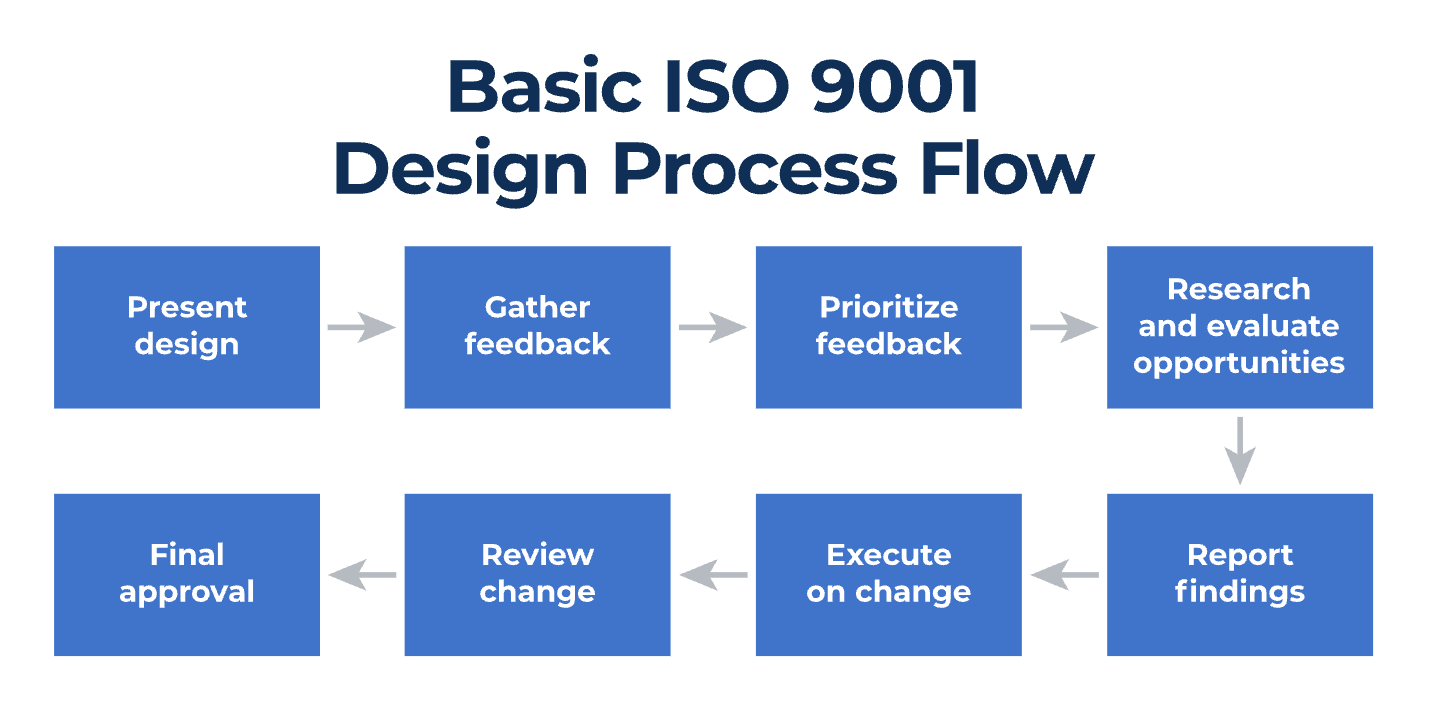
Figure 1: Design process flowchart [1].
Teams often do not know how to prepare for an upcoming review, and once in the review, reviewers do not always know what to critique. When this happens, reviews drift toward vague or poorly targeted questions — the kind that consume time, do little to move the design forward, and can even derail projects.
The issue is not the design review itself. It is the lack of focus within it.
During my career, I have participated in hundreds of design reviews, both presenting and providing critique. I believe the most effective reviews focus on identifying the critical unknowns of the project: what is still under-defined, untested, or unresolved.
These unknowns span performance, manufacturing, assembly, use, cost, and reliability. They represent the greatest risks and also the greatest opportunities for learning.
Over time, I compiled a set of questions aimed at revealing the critical unknowns [2].
These questions are not tied to a specific product or domain; they reflect recurring gaps in design definition across many projects. This list is useful for both teams preparing for a review and those conducting one. In either case, it is reasonable to expect that some version of these questions will arise. More importantly, if they do not, it is worth asking why.
Common Questions Asked in Design Reviews
For Proposed Solutions/Fixes
1. Does the proposed solution/fix overcome the shortcoming? If so, how well? Is the proposed solution worthy of continued pursuit?
For Performance
2. Does the current component/product/system perform as it should? If so, how well does it perform? If not, what is keeping it from doing so?
3. What performance trade-offs exist? And what has to be sacrificed to achieve improved performance?
4. Will the component/product/system withstand expected and reasonable unexpected conditions (e.g., loads/stress) without failure?
5. Do the parts move (or not move) as intended relative to each other?
6. Will the product cost exceed expectations? And by how much?
For Geometry/Assembly
7. Is the component/product/system an appropriate size/weight/capacity?
8. How will the product be assembled/disassembled?
9. Are the specified part and assembly tolerances appropriate for performance and manufacture?
10. Can the component/product/system be manufactured with the intended production process?
11. What is the installation process?
For Packaging/Shipping/Storage
12. How will the product be packaged?
13. Will the product survive shipping vibrations and storage temperatures?
14. Can shipping material waste be reduced?
For Maintenance
15. What parts of the system will need to be replaced/repaired, how will those parts be accessed, and how will the user/operator know a part needs repair?
16. What is the product maintenance plan?
17. What customer services will be available?

Figure 2: A design review [3].
For Reliability
18. Will the product work well as long as it is supposed to?
19. Does the component/product/system perform as it should repeatedly under various conditions?
20. Will the component/product/system and its packaging perform as required at both high and low temperatures, humidity, etc.?
21. How will the product be abused?
22. Is the component/product/system over or under designed?
For Aesthetics, Ergonomics, and Use
23. Do the product aesthetics match the intended audience/brand?
24. Once the product is unboxed, what is the process for initializing use?
25. Is the product intuitive to use?
26. Is the product safe to use, store, assemble, and transport?
27. Do the component/product/system colors and labels enhance or facilitate the user experience?
28. Does the product adequately signal how it should be used?
For Material
29. Are the chosen materials appropriate for the chosen manufacturing process and geometry?
30. Does the product contain hazardous materials, and how are those materials managed within the product?
31. How does the finish and appearance hold up with usage and time?
32. Are the product/system materials compatible with each other?
33. Will thermal expansion (or similar phenomena) affect performance?
For Sustainability
34. How will the product be recycled?
35. Can material usage be reduced?
36. Can more sustainable materials be chosen?
37. What is the product’s carbon footprint? What emissions result from the product’s transport?
38. What is the end-of-life product waste?
39. What good or bad outcomes are possible with this product?
40. Are there societal preconceptions about a product like this?
How to Use These Questions
Recognize that these questions are not meant to evaluate what is already known. They are meant to expose what is not yet known.
Each question targets a specific form of uncertainty, such as performance, manufacturing, assembly, use, or long-term reliability. Their value lies in clarifying where the design is still incomplete so that steps can be taken by the team to shore up the design.
When a team leaves a design review with a list of opinions, little progress has been made. When they leave with a clear understanding of what must be tested, resolved, or decided next, the design review has done its job.
For similar, but higher level questions that could appear in design reviews, check out 20 Questions of Product Development [1].
References
[1] “The Ultimate Guide to Mastering the Design Review Process.” Smartsheet, 2024, www.smartsheet.com/content/design-review-process?srsltid=AfmBOoqdr4sOLS2whEiwMANjVudqv_gKpY7XNMBDI-Ovu_gMwwQWo5Th.
[2] Mattson, Christopher A. Engineering Design Essentials. BYU Academic Publishing, 2023.
[3] “How to Run an Effective Design Review.” Altium Resources, 2024, resources.altium.com/p/how-to-run-effective-design-review.
[4] “20 Questions of Product Development.” BYU Design Review, www.designreview.byu.edu/collections/20-questions-of-product-development.
To cite this article:
Mattson, Chris. “Preparing for Design Reviews.” The BYU Design Review, 6 April 2026, https://www.designreview.byu.edu/collections/preparing-for-design-reviews.