Crosswalks: Improving Safety through Urban Design
As a college student, I usually walk to class every morning. This can be a nerve wracking experience.
Between my apartment and the Brigham Young University campus are a couple of streets I have to cross, and most of them have crosswalks painted on them with no traffic signals. This is fine, until pedestrians and cyclists almost get hit by vehicles as students rush to class and distracted drivers fail to notice people in their way. The road affords the space for people to travel across it to get to where they need to go. The problem comes when multiple people want to use the same space at the same time, with few, if any, alternative paths.
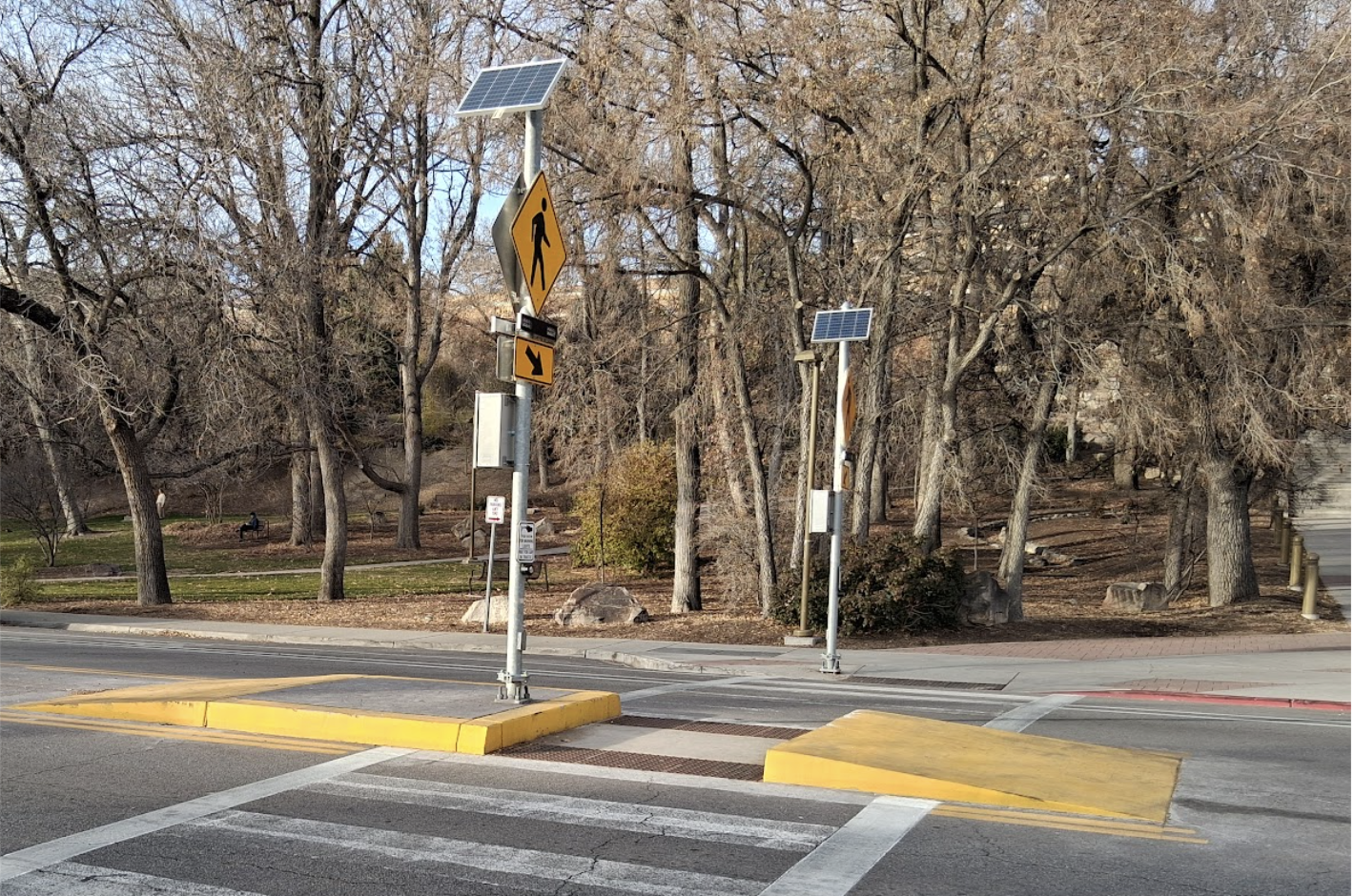
Figure 1: A recently updated crosswalk at the corner of 500 E and 800 N, Provo UT. Photograph by author.
Last year, the city of Provo upgraded the design of one of these crosswalks to include new elements that have definitely improved its safety. Signs, flashing lights, and a shorter crossing distance all help to make sure people are more aware of each other. This got me thinking: What are ways that we can design safer, more effective crosswalks that protect everyone at the intersection?
Speed vs. Safety
Driving speed is the most important factor in determining the safety of a street, and slow speeds make it easier for cars to stop in time to prevent collisions [1]. Since pedestrians are always more exposed than vehicles are, one way to help protect those using a crosswalk is to induce traffic calming measures as the cars approach it. These measures encourage people to drive at slower speeds, typically in areas like neighborhoods where speeds are already meant to be low.
Lane narrowing helps to slow the flow of traffic by forcing drivers to drive in a narrow lane, closer to curbs, parked cars, and other vehicles driving by them. They are required to pay more attention so as to not hit anything. Thus, most people will reduce their speed in favor of greater control of their vehicle in these situations.
Another way designers implement traffic calming strategies is by raising a small portion of the road in the form of a speed bump, speed cushion, or speed table [2]. These also encourage drivers to reduce their speed (usually to match the posted speed limit) in order to prevent their own discomfort or damage to their vehicle. Anyone who has driven over a speed bump too fast can tell you it is not a pleasant experience.
Various places utilize intelligent designs to accommodate their particular traffic situations. Roundabouts, for example, help to manage vehicle speeds, and are commonly found throughout Europe. They turn a four-way intersection into a circular, one-way road, which enables traffic to flow in the same direction until vehicles exit at their desired street. Although this is safer than other types of intersections [3], it typically involves a rework of the entire intersection, which extends a little beyond the purpose of this article. However, they are nonetheless a useful method of easing the flow of traffic in the name of safety.
Shorter Crossings
Beside traffic calming approaches, pedestrians are safer when crossing distances are shortened. This can be done by extending the curb a little further into the street, or by implementing half-way points known as pedestrian refuges. These concepts can also work as lane-narrowing strategies, but the intent is that people spend a shorter amount of time in the way of traffic.
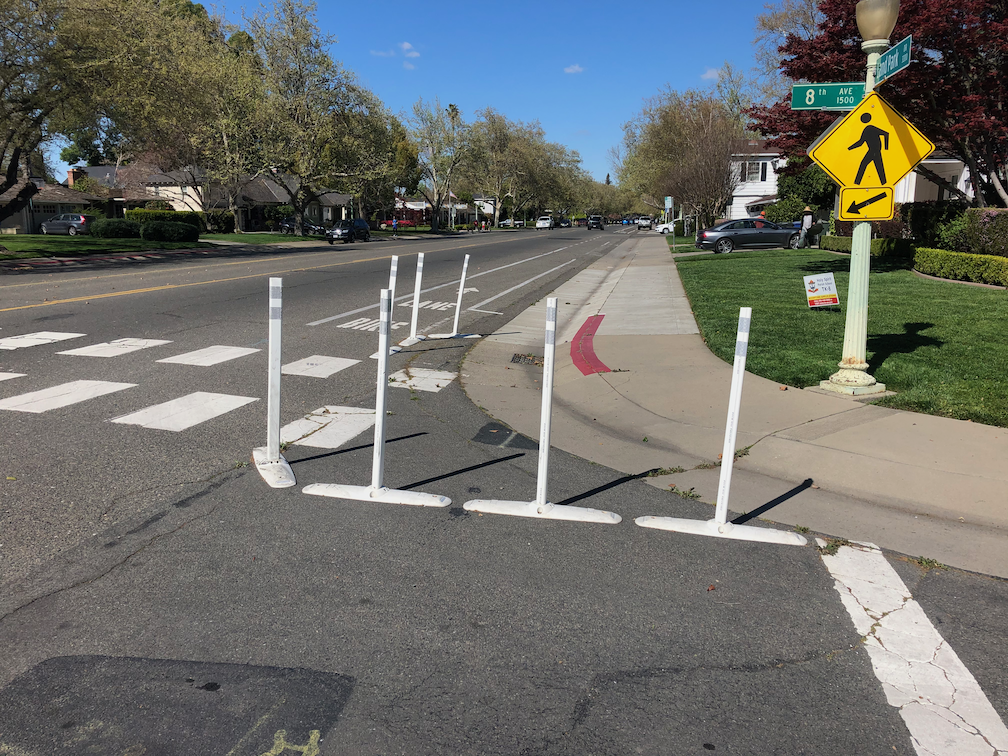
Figure 2: These delineator posts effectively extend the curb into the road before a person crosses [4].
Unlike traffic calming elements, pedestrian refuges can be utilized in places with higher speed limits and with multiple lanes of traffic [5]. It gives pedestrians more peace of mind as they only have to worry about crossing one lane at a time. They can spend more focus on the oncoming traffic conditions in one direction, with a place in-between to reassess.
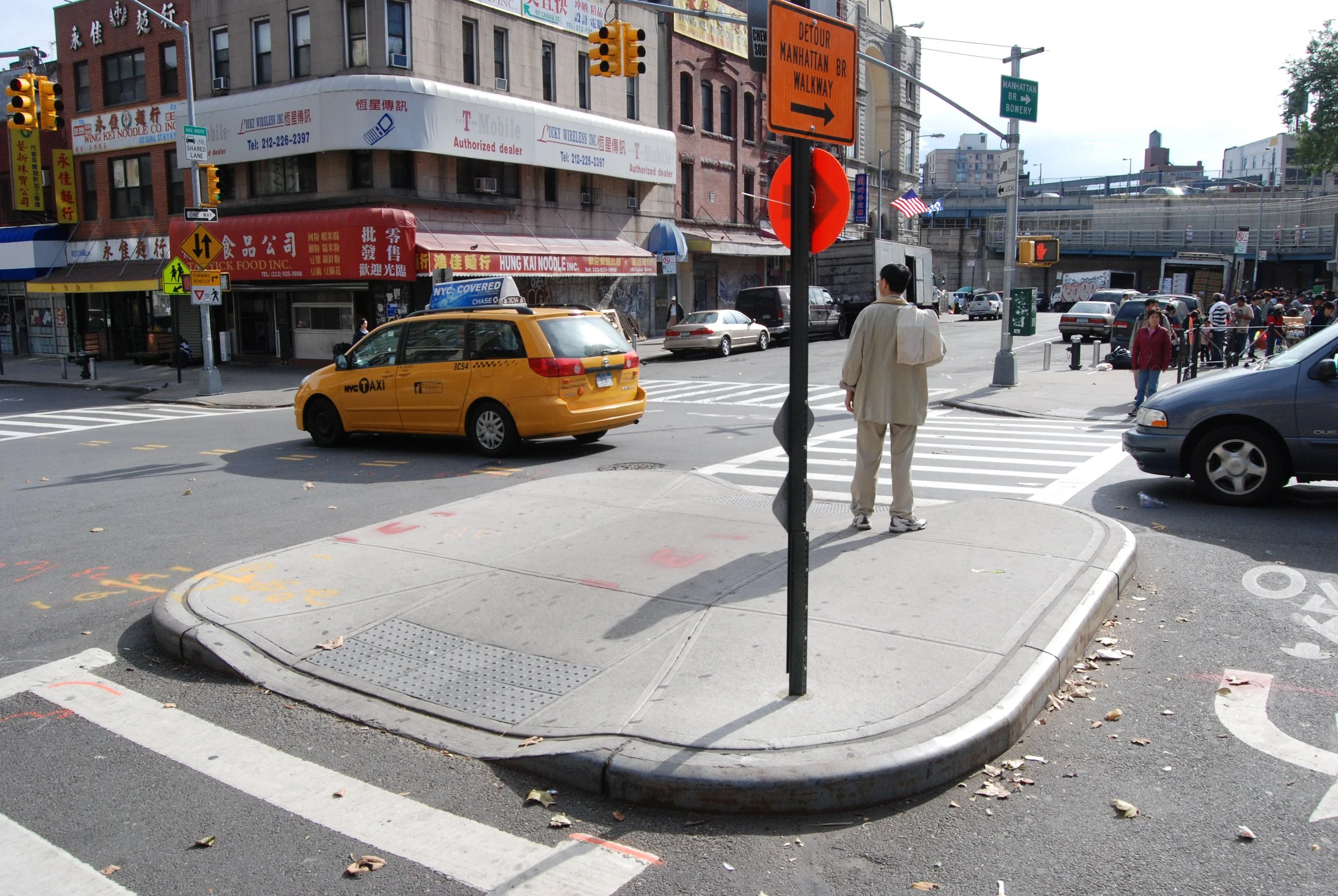
Figure 3: A pedestrian refuge in New York, USA [6].
Visibility
When drivers are more aware of what is in the road ahead of them, they can be more prepared to prevent an accident.
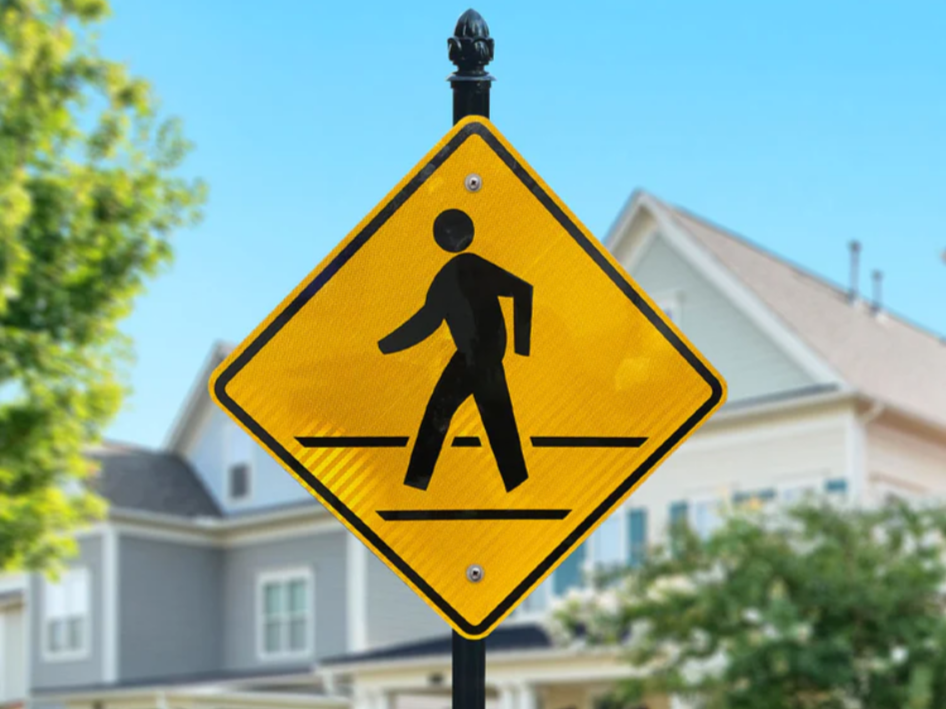
One thing that the redesigned crosswalk by BYU does incredibly well is clearly indicating when someone is crossing. On either side of the road, as well as in the pedestrian refuge, there is a button that when pushed will start flashing a couple small lights. The lights continue to flash while a person crosses the street. It is a small detail, but lights and reflective signage attract the attention of drivers, and are especially helpful at night or on rainy or snowy days where visibility is limited.
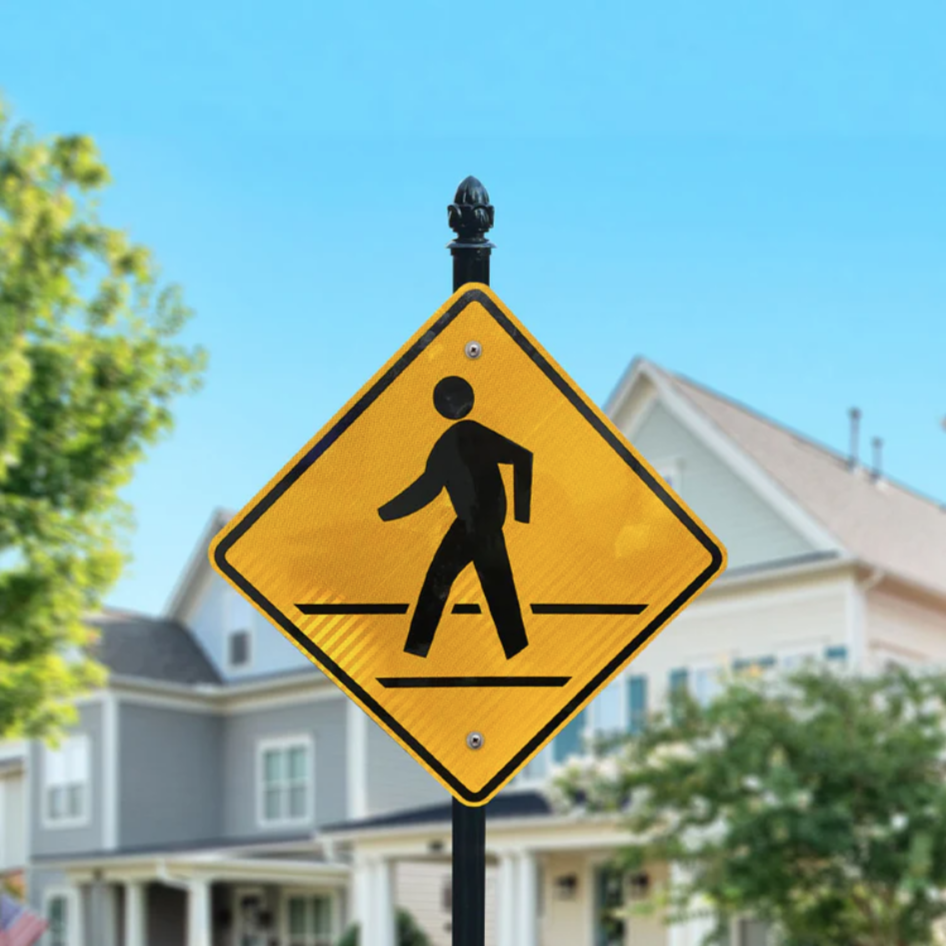
Figure 4: A pedestrian sign with bright, reflective colors [7].
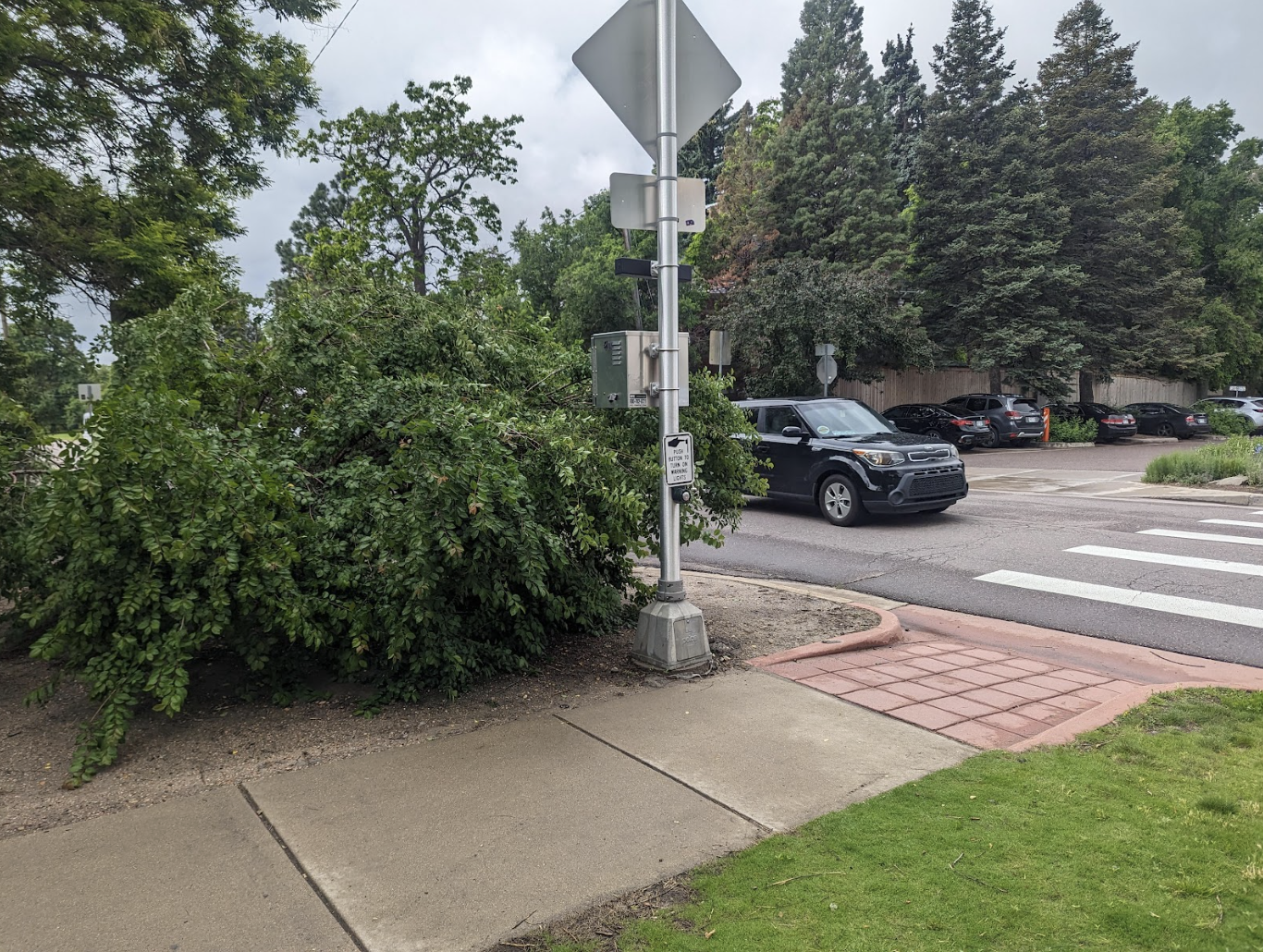
Figure 5: Bushes and foliage easily obstruct the view of oncoming traffic, and should be cleared [8].
Any effort to make sure both people and vehicles can be seen by all will improve the safety of a crosswalk.
Importance of Painted Lines
Everyone can recognize the hallmark design of a crosswalk: the classic “zebra stripe” pattern. The design and pattern of these painted lines are more important than you may think.
Despite the many possible line patterns to choose from, the U.S. Department of Transportation recognizes the “ladder pattern” as a “high visibility crosswalk marking.” Composed of interior longitudinal bars and transverse lines, it offers multiple benefits for emphasizing the definitions of the crossing [9]. For example, the transverse lines extending the length of the crossing help discourage people from walking outside of the marked area. The short, longitudinal bars within these lines help improve the visibility of the crossing for drivers.
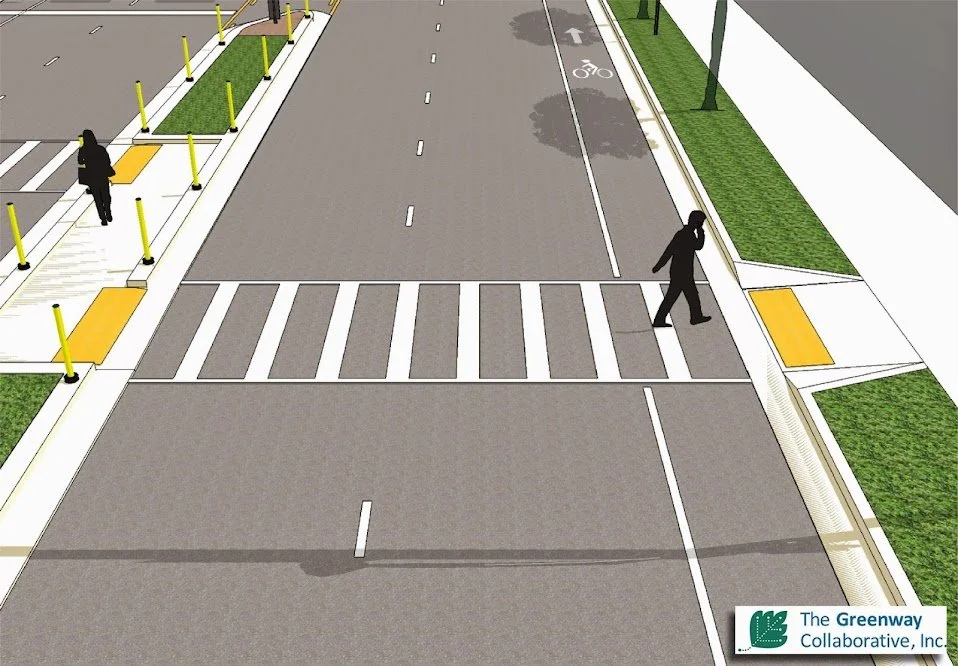
Figure 6: Ladder-patterned pedestrian crossings have longitudinal and transverse lines to create high visibility markings [10].
All in all, the painted lines indicate to everyone, both drivers and pedestrians alike, where the crosswalk begins and ends. It keeps everyone safer by defining the limits of the crossing.
Statistics
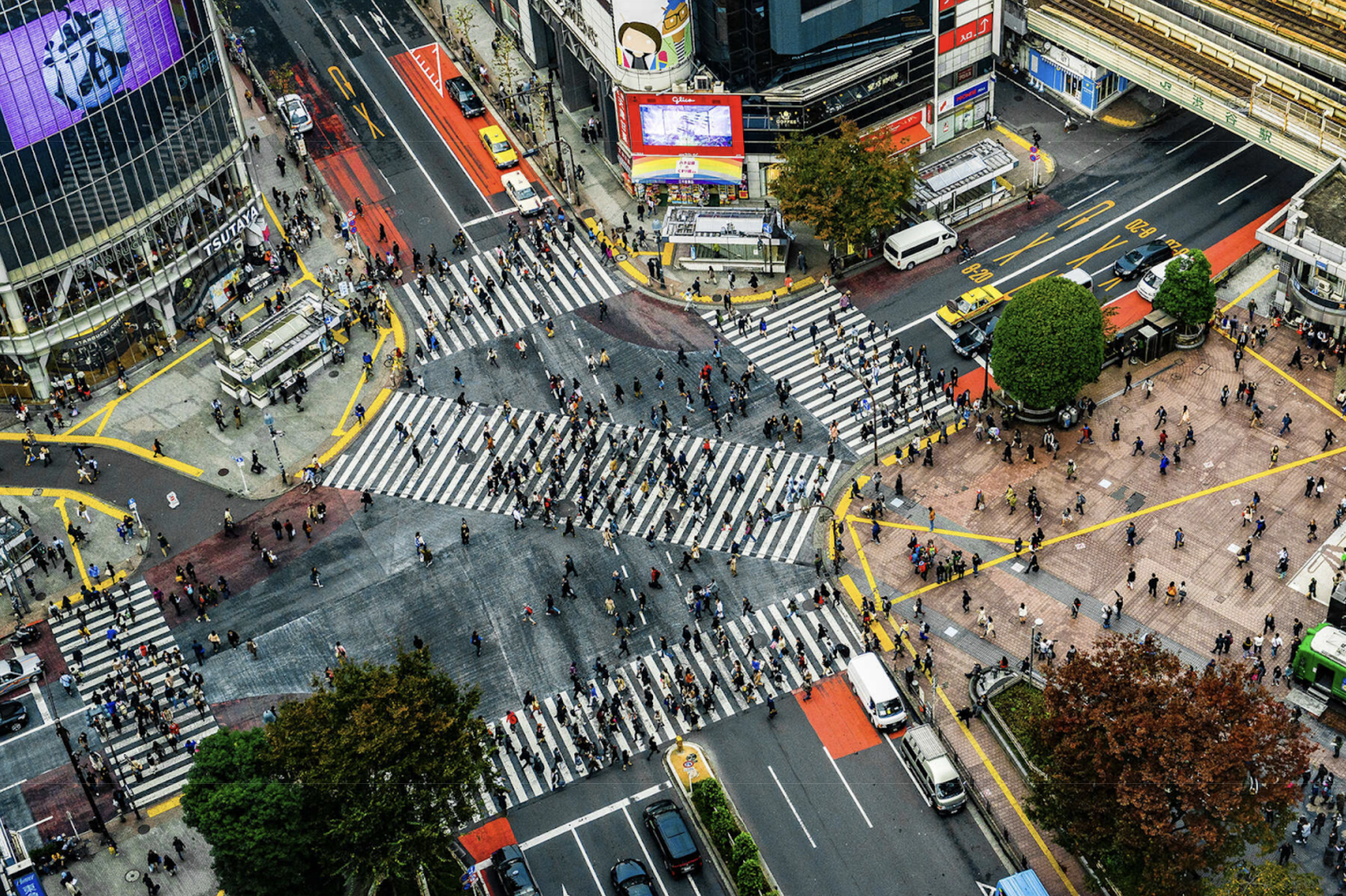
Figure 7: The iconic Shibuya Crossing in Tokyo, Japan [11].
Preliminary data shows that around 7,148 pedestrians were struck and killed by drivers in the U.S. in 2024 [12]. The UK Department for Transport reports that 409 pedestrians were killed in 2024 in Great Britain. Additionally, 5,823 were reported to be seriously injured and 12,944 slightly injured [13]. Regardless of who is at fault, these numbers are way too high.
Traffic crossings, sidewalks, and roads can be designed and engineered to perfection, but at the end of the day, the safety of our communities boils down to our commitment to each other. Last week, in his first address as President of the Church of Jesus Christ of Latter-day Saints, Dallin H. Oaks reminded us that “To have humility is one of the powerful commandments we have been given to guide us in our mortal journey.” [14] When people are selfish, drive recklessly, or don’t respect the power of vehicles on the road, injury or even death can occur. It is up to each one of us to be cognizant of each other and obedient to traffic laws and procedures in order to create a better society for everyone.
References
[1] “Speed Management.” Global Street Design Guide, Global Designing Cities Initiative, gdci.wpengine.com/publication/global-street-design-guide/operational-and-management-strategies/speed-management/. Accessed 16 Feb. 2026.
[2] “Traffic Calming Strategies.” Global Street Design Guide, Global Designing Cities Initiative, globaldesigningcities.org/publication/global-street-design-guide/designing-streets-people/designing-for-motorists/traffic-calming-strategies/. Accessed 16 Feb. 2026.
[3] “Roundabouts.” IIHS-HLDI, Insurance Institute for Highway Safety, www.iihs.org/research-areas/roundabouts. Accessed 16 Feb. 2026.
[4] “Half-Measure Corners.” Getting Around Sacramento, 6 Apr. 2023, gettingaroundsac.blog/2023/04/06/half-measure-corners/.
[5] “Pedestrian Refuges.” Global Street Design Guide, Global Designing Cities Initiative, gdci.wpengine.com/publication/global-street-design-guide/designing-streets-people/designing-for-pedestrians/pedestrian-refuges/. Accessed 16 Feb. 2026.
[6] Gnarly. “Refuge Island.” Wikimedia Commons, 2009, commons.wikimedia.org/w/index.php?curid=12123809. CC BY-SA 3.0.
[7] “Pedestrian Symbol Sign.” Signature Streetscapes, signaturestreetscapes.com/products/pedestrian-symbol-sign. Accessed 16 Feb. 2026.
[8] “Safety Reminder for Corner Pedestrian Sight.” Reddit, r/Denver, 17 June 2023, www.reddit.com/r/Denver/comments/14b2ty5/safety_reminder_for_corner_pedestrian_sight/.
[9] Manual on Uniform Traffic Control Devices for Streets and Highways. 11th ed., U.S. Department of Transportation, Federal Highway Administration, 2023, mutcd.fhwa.dot.gov/pdfs/11th_Edition/mutcd11thedition.pdf.
[10] “Midblock Crosswalks for Arterial Five-Lane Roadways.” The Greenway Collaborative, greenwaycollab.com/midblock-crosswalks-for-arterial-five-lane-roadways/. Accessed 16 Feb. 2026.
[11] “Shibuya Crossing.” Posterlounge, www.posterlounge.com/p/735355.html. Accessed 16 Feb. 2026.
[12] “Pedestrian Traffic Fatalities by State: 2024 Preliminary Data.” Governors Highway Safety Association, 2024, www.ghsa.org/resource-hub/pedestrian-traffic-fatalities-2024-data.
[13] “Reported Road Casualties in Great Britain: Pedestrian Factsheet 2024.” GOV.UK, Department for Transport, 2024, www.gov.uk/government/statistics/reported-road-casualties-great-britain-pedestrian-factsheet-2024/.
[14] Oaks, Dallin H. “Coming Closer to Jesus Christ.” BYU Speeches, Brigham Young University, 2024, speeches.byu.edu/talks/dallin-h-oaks/coming-closer-to-jesus-christ/.
To cite this article:
White, Dalton. “Crosswalks: Improving Safety through Urban Design.” The BYU Design Review, 16 February 2026, https://www.designreview.byu.edu/collections/crosswalks-improving-safety-through-urban-design.