Some great ideas come from Japan and Kansei Engineering is one of them. The principles of kansei can make us more sensitive to customers’ emotions and thus more proficient, design engineers.

All in Design Methods
Some great ideas come from Japan and Kansei Engineering is one of them. The principles of kansei can make us more sensitive to customers’ emotions and thus more proficient, design engineers.
As engineers we often need to conceptualize (and sketch) specific geometry such as specific wing shapes, specific gear trains, or a new component that needs to fit in a specific spot on an existing device. In this article, I’ll share a few insights and exercises designed to help you produce sketches of specific geometry, including cross-section sketches, and exploded-view sketches.
The recently published book “Product Development: Principles and Tools for Creating Desirable and Transferable Designs” is a unique addition to design resources available to students and engineering professionals interested in evolving their design ideas from the early stages of opportunity development all the way through to production.
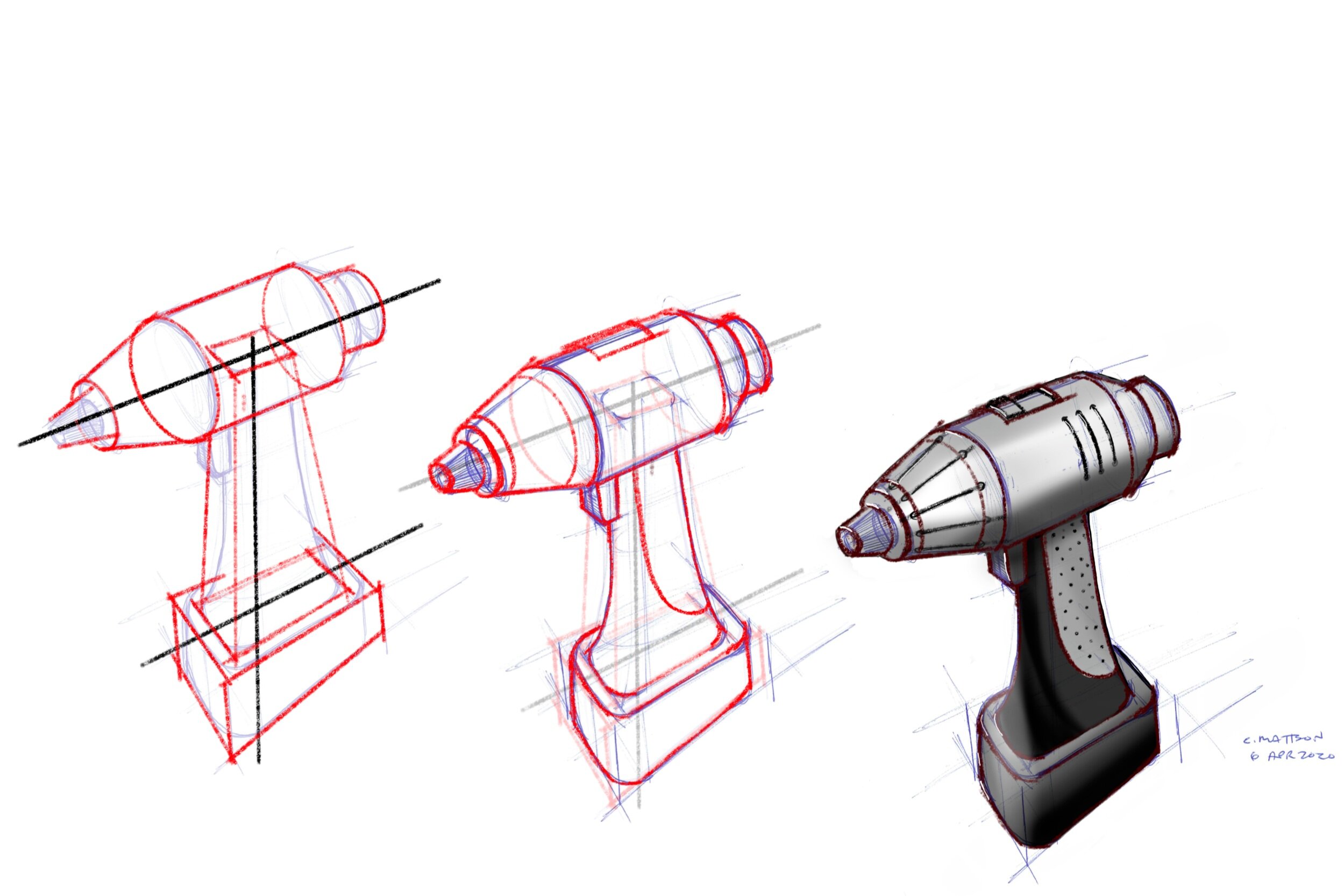
Three new sketching exercises, plus a three-step sketching approach and mathematical rules that when followed produce realistic sketches.
Evaluation matrices are one of the most misused, misunderstood, tools of product development. However, a simple shift in the way we think about them can help us all get the most out of evaluation matrices.
Almost all product development is done in a team setting, owing largely to the strongly held belief that the collective thinking of a group outperforms that of “the lone genius."
Have you ever wondered, “when am I going to have a breakthrough idea?” If so, then maybe the better question to ask is “what am I doing to come up with that idea?”
She doesn’t know it, but Bon Appétit pastry chef Claire Saffitz has taught me and my students what I wish all engineers could know and practice. She’s taught us how to approach design problems with the right skill and attitude.
Explore TRIZ, an inventive way of problem solving invented by Genrich Altshuller.
Many of the things we design are not going to work the way we thought they would at first. There are just too many unknowns until we try it. In anticipation of this, great designers always have a back-up solution.
The fundamental goal of product development is to evolve the product from an abstract idea to a specific manufacturable design.