Quarterly Featured Articles
At The BYU Design Review, we explore the issue of engineering design from niche topics to general principles. Our articles are carefully crafted from each author’s unique perspectives and reputable sources. The articles below are distinguished for their exceptional insight, flow, impact, and visuals. Articles are reviewed after each quarter and displayed on the main page for the subsequent quarter. If you would like to see your article featured on our website, check out our article submission portal.
Article Rating
Insight (7 points): The article is original, critically evaluating the topic with fresh perspectives and technical accuracy.
Flow (5 points): The article is accessible for a wide spectrum of readers, with a clear structure, logical transitions, and engaging voice.
Impact (5 points): The article is readily applicable to the general readership and supplies meaningful, reputable citations and links to enhance its validity.
Visuals (3 points): The article include engaging media that are well-integrated into the text.
2026: April - June
The PlayPump: Lessons Learned from a Design Failure

Analyze the history of the PlayPump design failure in this article. Learn how overlooking product misuse, vague problem definitions, and inadequate testing transformed a humanitarian dream into a cautionary tale.
Editor’s Comment
Insight (6/7) – Sharp evaluation of a famous social-impact failure through classic design principles. Flow (5/5) – Excellent narrative pacing that bridges humanitarian goals with mechanical realities. Impact (5/5) – Delivers essential lessons in niche product design. Visuals (3/3) – Integrates clear technical diagrams and field photography that capture the human element.
This article by Caleb Jenkins is a compelling case study on how enthusiasm and novelty can mask critical design flaws. By cataloguing the poor design decisions, he outlines a crucial roadmap for designers to avoid the same mistakes and actually capitalize on enthuasiasm.
2026: January - March
The Return of the Atom
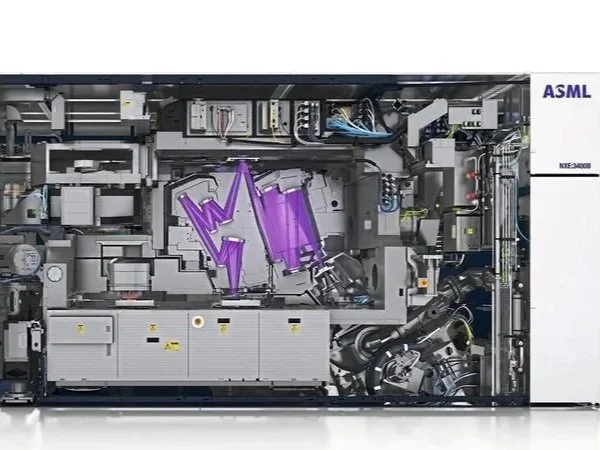
Explore with Dr. Benjamin Terry how ASML, Boston Dynamics, and SpaceX are ending decades of physical stagnation, ushering in a new era of engineering innovation across the universe of atoms.
Editor’s Comment
Insight (7/7) – Delivers high-level technical depth without sacrificing readability. Flow (5/5) – Transitions logically from history to mechanical subsystems. Impact (4/5) – Provides career-relevant exposure to the shifting landscape of the engineering industry. Visuals (3/3) – Uses essential technical diagrams to clarify complexity.
This article is a visionary deep dive into the engineering renaissance of the 2020s. By discussing the feedback loop between semiconductor precision and autonomous hardware, the author provides a professional-grade look at the "sea change" disrupting traditional design silos.
Inaugural Articles
2025: October - December
Engineering Design in Formula 1

The F1 championship depends on engineering mastery. Learn how teams use aerodynamics, downforce, ground effect, modeling, and strategic tire choices to design the fastest, most competitive racing car.
Editor’s Comment
Insight (7/7) – Delivers high-level technical depth on aerodynamics and fluid dynamics without sacrificing readability. Flow (4/5) – Transitions logically from racing to the mechanical subsystems. Impact (4/5) – Provides career-relevant exposure to professional engineering tools. Visuals (3/3) – Uses essential technical diagrams to clarify complex physics.
This article is a high-octane deep dive into the marginal gains that define elite performance. By dissecting the mechanics of negative lift and the nuances of ground effect, Josh Engle provides a professional-grade look at the design cycle and the rigorous testing required to innovate within a stringent regulatory framework.
2025: July - September
Wabi-sabi vs Kaizen

Learn about the Japanese philosophies of wabi-sabi and kaizen with Professor John Salmon. Discover how to apply wabi-sabi, which finds beauty in imperfection, and kaizen, which focuses on continuous improvement, to enhance your life and design projects.
Editor’s Comment
Insight (6/7) – Offers a thoughtful philosophical framework for designers. Flow (5/5) – Effortlessly moves from art history to anecdotes and application. Impact (3/5) – Helpful for team morale and managing constraints. Visuals (2/3) – The Kintsugi image is highly effective and central to the theme.
This article is human-centric counterpoint, reconciling the tension between accepting imperfection and striving for improvement. By applying these Japanese philosophies to the realities of project constraints and team dynamics, Dr. Salmon provides a psychological toolkit for engineers facing the stress of unfinished work.
2025: April - June
Dr. Paul MacCready and The Kremer Prize
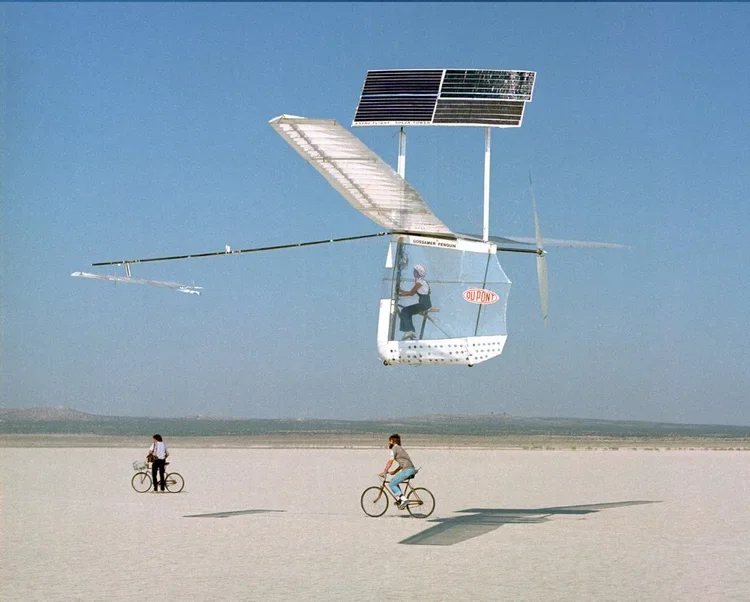
Flight! People have wondered about it since the beginning of time. Paul MacCready was one of those people deeply interested in flight. What follows is a story of Paul MacCready, and what we can learn from him in the engineering design process.
Editor’s Comment
Insight (6/7) – Sharp historical reframing of a famous milestone. Flow (3/5) – Clear, logical progression that effectively builds the design challenge. Impact (5/5) – Offers a quintessential lesson in failing fast and iterative prototyping. Visuals (3/3) – Historic photos provide great context throughout the narrative.
This article uses the historical quest for human-powered flight to illustrate the fundamental importance of problem reframing. By detailing Paul MacCready’s shift from designing a "perfect" plane to a "rapidly rebuildable" one, Taylor Heiner highlights how optimizing for iteration can overcome seemingly impossible technical hurdles.
2025: January - March
The Doofenshmirtz Design Dilemma: Lessons in Engineering from Danville's Most Persistent Inventor

Author Adam Rose explores two design lessons we can learn from the most prolific inventor in pop culture. From -Inator to -Inator, Dr. Doofenshmirtz showed us that engineering can solve problems and tell compelling stories.
Editor’s Comment
Insight (6/7) - extremely original synthesis, combining pop culture with design. Flow (5/5) - Seamless narrative arc between cartoons to tech failures. Impact (4/5) - Actionable takeaways for thus who tend to rush into design. Visuals (2/3) - Appropriate and well-integrated visuals.
Adam Rose effectively uses a familiar pop-culture lens to illustrate fundamental design principles, specifically the importance of stakeholder empathy and rigorous technical testing. By connecting fictional failures to real-world examples like Google Glass, the author provides an accessible critique of how poor problem definition can derail innovation. The article’s strength lies in its ability to translate design theory into practical, relatable lessons, making it a balanced and engaging article.